′Lā yukallifu Hāhu naf san illā wus'ahā' This quotation is part of
回答
(D)
Ayāt Amanar - Rasūl
2
‘Surely, we created man of the best stature, then, we reduced him to the lowest of the low save those who believe and good works'
This quotation is from Surat
回答
(C)
al-Tīn
3
The memorization, recording and compilation of the Qur’ān ensured its
回答
(C)
authenticity
4
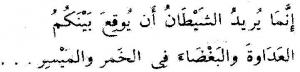
‘Inna mā yurīdu ash-shaytānu an yūqi ‘abaynakumul adāwata wal-baghdā fil khamr wal-maysir (Q. 5:91)
The verse quoted above enumerates the evils of
回答
(D)
wine and gambling
5
One of the strong proofs of the authenticity of the Qur’ān is that
回答
(A)
the like of it has not been produced by an individual or a group of people
6
In Islam, intoxicants are
回答
(A)
forbidden even in small quantity
7
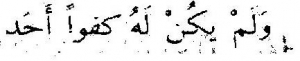
‘wa lam yakun lahu kufuwan ahad’
This verse of the Qur’ān (112:4) says that
Allah
回答
(B)
is unique
8
‘God was well pleased with the believers when they pledges all allegiance unto thee beneath the tree’.
The verse above was revealed in connection with the
回答
(D)
pledge of ‘Aqabah
9
From which chapter of the Qur’ān is the verse which declares ‘Certainly, we created man in the best make’?
回答
(B)
95
10
To maintain the quality of Taqwā one has to be
回答
(B)
disciplined
11
Sahīh al − Bukhāri is regarded as the most authentic collection of Hadīth because its collector was
回答
(C)
the most critical of the collectors
12
Musnad is a collection of ahādīth arranged
回答
(A)
according to the names of their authorities
13
Part of the 23rd Hadīth of al-Nawawi’s collection refers to purification as a
回答
(A)
half of faith
14
Which of the following statements completes the Hadīth which says ‘He is not a faithful Muslim who eats to his fill while …’
回答
(B)
his neighbor is hungry beside him
15
A Hādith with uninterrupted chain of authorities traced back to the Prophet Muhammad (S.A.W) himself is described as
回答
(A)
Mutawātir
16
Which of the following terms is most closely related to divorce?
回答
(B)
'Iddah
17
Kaffāraℎ (major expiation) is compulsory upon a husband who revokes
回答
(B)
zihār
18
Part of the wisdom in instituting the ‘iddah in marriage is to
回答
(C)
give chance for reconciliation
19
What percentage of the estate of a late childless wife can the Muslim husband inherit?
回答
(A)
1/2
20
The money given out a woman at the time of contracting her marriage is known as
回答
(A)
al-Mahar
21
The waiting period for a divorced woman is termed
回答
(D)
'iddah
22
when Prophet Muhammed (S.A.W) led the Muslims in a
triumphant entry into Makkah, all Makkans were assured of their safety if they entered the sacred mosque,
remained indoors in their homes or
回答
(A)
entered the house of Abū Sufyān
23
The Prophet (S.A.W) ordered some of the Muslims to emigrate to Abyssinia
回答
(C)
in order to go beyond the reach of their persecutors
24
The monogamous life of Prophet muhammed (S.A.W) lasted for
回答
(D)
25years
25
The Truce of al-Hudaybiyyah included terms such as
回答
(C)
the observance by both parties of a ten year period of peace
26
Which of the following led away a section of the Muslims army when preparations were on for the battle of Uhud?
回答
(C)
'Abdullah b. Ubayy
27
Which of the following battles resulted in more people being converted to Islam?
回答
(C)
Hunayn
28
Muhammad rasūlullah in the kalimatu shshahādah means that Muhammed (S.A.W.) is to Allah a
回答
(B)
messenger
29
Defrauding by giving too little and asking for too much is condemned in Sūraℎ
回答
(B)
at- Tatfīf
30
Standing on “Arafāt is a major difference between Hajj and
回答
(D)
‘Umrah
31
When you read loudly while praying Zuhr in one of the rak’at, you are expected to
回答
(C)
make a ba dī sujūd
32
Those to benefit from the proceeds of Zakah include
回答
(B)
officers employed to administer it
33
The last sentence in the Talbiyah is
回答
(B)
Lā sharika laka
34
The last sentence in the Talbiyah is
回答
(B)
Lā sharika laka
35
One of the conditions for performing the Hajj is the
回答
(C)
ability to finance the journey
36
A Muslim who joins the Imām while he is rising from the last rukū’ of the last rak’ah has to
回答
(C)
continue the prayer and thereafter observe all the rak’āt
37
In which verse of the Qur’ān are women directed to dress modestly?
回答
(B)
24 : 31
38
Superstitious beliefs are not compatible with Islamic principles because they are
回答
(B)
usually contrary to the concept of īmān
39
Prophet Mūsā(A.S.) went to the sacred valley where he
回答
(A)
received divine directives
40
Kalimatu sℎ −shahādah is the first pillar of Islam, the second being
回答
(D)
observance of the five daily prayers.
41
What is ijmā in Islamic law?
回答
(A)
Consensus of opinion
42
The sources of the Sharī ‘ah include
回答
(D)
Qur'ān, Ijmā and Qiyās
43
Which of the following are secondary sources of the Sharī'aℎ?
回答
(B)
Ijmā' and Qiyās
44
Imām Ash-shāfi'l studied under two of his predecessors. These are
回答
(B)
Mālik and Abū Hanīfah
45
The earliest written records of West African history were written in Arabic because
回答
(C)
several Arabic schools existed in West African shortly after the advent of Islam