The outcome of the Prophet’s visit to Cave Hira was
Cevap
(B)
revelation of the Glorious Qur’an “As a result of Prophet Muhammad’s withdrawal to the cave of Hirah near Makkah, when he was 40 years old, Angel Jibril appeared to him with a revelation from God”
2
The outcome of the Prophet’s visit to Cave Hira was
Cevap
(B)
revelation of the Glorious Qur’an “As a result of Prophet Muhammad’s withdrawal to the cave of Hirah near Makkah, when he was 40 years old, Angel Jibril appeared to him with a revelation from God”
3
One of the importance of the first revelation was the
Cevap
(B)
dissemination of knowledge Ref: (Q 96: 1-5) “read in the name of your Lord…”
4
The gradual spiritual and moral development of Muslims was the wisdom behind the
Cevap
(D)
piecemeal revelation of the Glorious Qur’an.
5
The verse above is in relation to the
Cevap
(B)
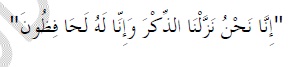
preservation of the Glorious Qur’an Ref: Q 15:19 ‘Surely, We have sat down the Reminder [al-Qur`an] and surely we will protect it’.
6
The battle that served as a pointer to the compilation of the Glorious Qur’an was fought at
Cevap
(D)
Yamāmah. “Many Muslims who had memorized the Holy Qur`an died in the battle of Yamamah (in 633CE). Umar bin Khataab feared possible extinction of the Qur`an if measures were not taken…”
7
The committee that standardized the Glorious Qur’an is made up of
Cevap
(C)
four people "Uthman bin Affan appointed a panel of four people to carry out the standardization of the Holy Qur`an. They include; 1 – Zaid bin Thābit; 2 – Abdullahi bin Zubair; 3 – Sa’ad bin Al-ÁS and 4-Abdul-Rahman bin Hārith”
8
A characteristic common to Makkan chapters is that, they
Cevap
(C)
contain a lot of oaths
9
The victory of the Roman Empire over the Persian Empire after the Persians had defeated the Romans as stated in the Glorious Qur’an (Q. 30: 2-3) is an evidence of the
Cevap
(D)
authenticity of the Glorious Qur’an
10
The Qur’an is different from other revealed Books because
Cevap
(C)
both spiritual, moral and social values are found in it
11
Prophet Muhammad (SAW) did not hand-over the Glorious Qur’an to his companions in an arranged form and in a single written volume because
Cevap
(B)
the revelation did not come in one piece but at intervals
12
The correct meaning of tafsir is the
Cevap
(A)
detailed explanation and commentary of the Glorious Qur’an
13
Tajwid as one of the science of the Glorious Qur’an is important because
Cevap
(C)
it provides the knowledge of correct pronounciation and recitation of the Glorious Qur’an
14
In the rule of Tajwid, the portion of the verse underlined above applies to
Cevap
(C)
tafkhīm ‘Answer is Tafkheem ‘ (Rau) will be pronounced with Tafkheem if the Rau (j) has a Dommah
15
The only Sūrah in the Glorious Qur’an which must be recited in every obligatory prayer is
Cevap
(C)
al-Fātīhah “Suratul-Fatiha must be recited on each rakàt of Salát, without it. The Salāt is voided.
16
The verse above in sūrah al-Lahab means
Cevap
(C)
no profit to him from all his wealth and gains Ref: Suratul Layab Ayat 2 (Q. 111:2)
17
Q 16. One important lesson taught in Suratul Kawthar is that Muslims should
Cevap
(D)
worship Allah and sacrifice ‘Therefore turn in prayer to your Lord and sacrifice to Him only”. Ref: Q: 108:2.
18
Suratul Mā’ūn discusses the privilege to be enjoyed by the
Cevap
(D)
the needy.
19
The eagerness and zeal of Muslim warriors to fight in the cause of Allah is one of the major theme of Sūrah
Cevap
(B)
al-Adiyah
20
The allegorical and the ambiguous verses of the Glorious Qur’an are understood through the
Cevap
(D)
tafsir of the Glorious Qur’an
21
Hadith 3 of an-Nawawi’s collection shows that Islam is built upon
Cevap
(B)
five pillars
22
The teaching in the 10th Hadith of an- Nawawi is that
Cevap
(C)
abstinance from forbidden things is prelude to accepting prayers
23
‘Do not get angry’
This tradition from the 16th Hadith of annawawihas been repeated by the Prophet (SAW)
Cevap
(D)
many times. “The Prophet S.A.W repeated don’t be angry several times”.
24
What differentiates Hadith Qudsi from Hadith Nabawi is the
Cevap
(C)
wording and teaching intended The word of hadith qudusiy is by the Prophet; the meaning is from God…”
25
One of the peculiarities of Sahih Bukhari is that ahādith are sorted according to
Cevap
(B)
chapters
26
One of the two compilers of Hadith that deals with legal traditions of permissions and prohibitions is
Cevap
(C)
Ibn Maja “kitaab al-sunan Abu-Dawud contained only traditions relating to Ahkām-things ordained or allowed or forbidden by law…”
27
One of the moral lessons in Q.17:23 apart from obedience to parents is
Cevap
(C)
persévérance
28
The Jews were admonished to avoid mixing truth with falsehood in
Cevap
(D)
Q.2:42.
29
Islam encourages every Muslim to seek a lawful livelihood through
Cevap
(B)
dignity of labour
30
Islam as a monotheistic religion expects that every faithful follower should
Cevap
(B)
serve Allah without associates
31
Seeking assistance from the fortune tellers is forbidden because
Cevap
(C)
it leads to ascribing absolute power to a fellow being
32
It is shirk in Islam to
Cevap
(D)
masquerade.
33
Suhf was revealed to
Cevap
(C)
prophet Ibrahim (AS)
34
In Islam, the articles of Imān are
Cevap
(A)
six
35
The presentation of Sermon is an obligation on the Imam when leading
Cevap
(C)
Friday prayers
36
One of the conditions that make prayer obligatory on believers is
Cevap
(D)
attainment of maturity
37
The supererogatory fasting of Āshura is observed on the
Cevap
(C)
10th of al-Muharram Ashūrā is recommended by the Prophet S.A.W. for the muslims to fast on the 10th Day of the month of Muharram’.
38
Ayyam at-tashriq are the days of
Cevap
(D)
eating and drinking.
39
The minimum number of witnesses in an Islamic marriage is
Cevap
(C)
two male “Marriage must not be conducted in secret. There must be at least two adult witnesses (male)”
40
The term, Shari’ah refers to
Cevap
(A)
a path
41
One of the scholars reported to have been imprisoned by his non compromising stance was
Cevap
(B)
Abu-Hanifah “Imam Abu Hanifa was imprisoned for his non compromising stance and died in the prison at the age of 70 years in the year 150AH.
42
The entrenchment of an Islamic economic system is aimed at
Cevap
(D)
promoting equitable distribution of wealth.
43
One of the major consequences of ribā is that, it makes people
Cevap
(B)
lazy “The economic consequence of Ribbah is that, it makes people lazier”
44
Mas’uliyyah as a principle of the the Islamic political system is a measure to check
Cevap
(D)
misappropriation “Mas’uliyyah means a mechanism based on which public affairs are checked with a view to preventing them from misappropriating the resources put in their care”
45
Allah commands Muslims to observe and fulfill agreements with the non-Muslims, if the later do not
Cevap
(D)
violate the terms of the agreement
46
During the Jihiliyya era, the Ka’aba was the center of poetic contest at the annual festival called
Cevap
(B)
ukāz
47
In Pre-Islamic Arabia, the Arabs killed their daughters because they
Cevap
(D)
did not participate in wars
48
The first person who recognized signs of Prophethood on Muhammad (SAW) was a
Cevap
(A)
Christian Monk
49
Members of the Prophet’s family that embraced Islam the first day did so, on the basis of his
Cevap
(A)
truthfulness and uprightness
50
The teachings of Uthman b. Fodio are remembered today as it relates to