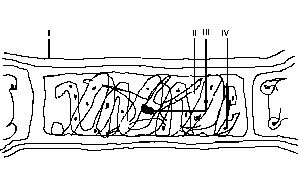
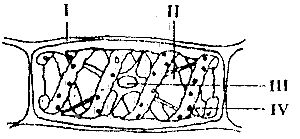
The structure that are common to both plant and animal cells are labelled
Sagot
(C)
II and III
2
Food is stored in the structure labelled
Sagot
(C)
IV
3
One distinctive feature in the life history of liverworts is that they exhibit
Sagot
(A)
Alternation of generation
4
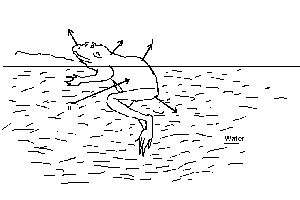
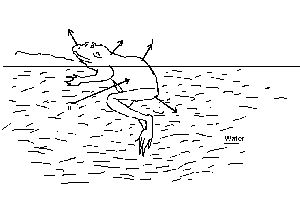
A noticeable adaptation of the animal to its aquatic habitat is the possession of
Sagot
(C)
webbed digits
5
The process of water loss and intake indicated by the arrow labelled I and II are respectively
Sagot
(D)
evaporation and osmosis
6
The umbrella shaped fruiting body of a fully developed mushroom is the
Sagot
(A)
Pileus
7
The similarity among organisms belonging to the same group will be least within each
Sagot
(C)
kingdom
8
Hermophroditic reproduction can be found among the
Sagot
(C)
Annelids and molluscs
9
An insect whose economic importance is both harmful and beneficial is the
Sagot
(D)
Butterfly
10
The cell component that is present in a prokaryotic cell is the
Sagot
(B)
Ribosome
11
The stunted growth of a leguminous plant suffering from nitrogen deficiency may be corrected by inoculating the soil with
Sagot
(C)
Rhizobium
12
If water that has been coloured red is poured at the base of a wilting plant, it will appear as a red stain in the cells of the
Sagot
(A)
xylem
13
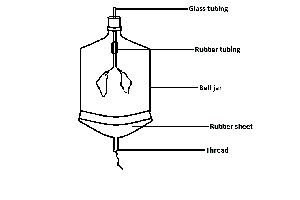
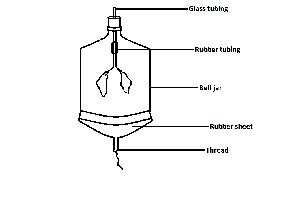
The aim of the experiment is to demonstrate
Sagot
(B)
the part played by the pleural cavity and diaphragm in respiration
14
In the experimental set-up, the rubber sheet represents the organ called
Sagot
(C)
diaphragm
15
The dark reaction of photosynthesis involves the
Sagot
(A)
reduction of carbon(IV)oxide to organic
16
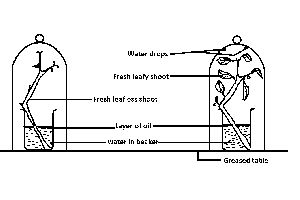
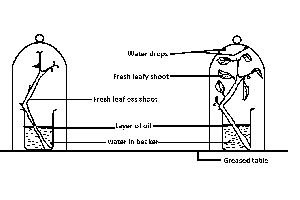
The experiment is used to demonstrate that
Sagot
(B)
transpiration occurs through the leaves
17
In the experiment, the layer of oil serves to prevent water loss
Sagot
(B)
evaporation
18
Organisms I, II, III and IV have surface/volume ratios of 1:2, 1:3, 1:4 and 1:5 respectively. The organism that is likely to have the most complex transport system is
Sagot
(A)
IV
19
The part of the mammalian digestive system where absorption of nutrient takes place is the
Sagot
(A)
ileum
20
The best method of propagating sugarcane is by
Sagot
(D)
Stem cuttings
21
In mammalian males, the excretory and reproductive systems share the
Sagot
(C)
Urethra
22
Metabolic production of urea is carried out in the
Sagot
(B)
Liver
23
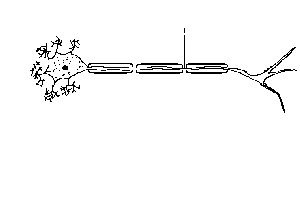
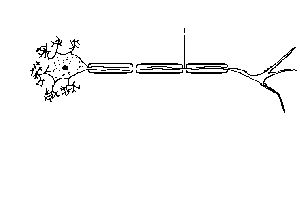
The structure can be found in the
Sagot
(B)
Peripheral and central nervous system
24
The point marked I is referred to as
Sagot
(D)
node of Ranvier
25
Homologous pairs of chromosome separate during
Sagot
(D)
Meiosis
26
An example of a caryopsis is
Sagot
(B)
Maize grain
27
The response of plants to external stimuli in a non-directional manner is known as
Sagot
(D)
Nastic movement
28
The most important hormone that induces the ripening of fruit is
Sagot
(A)
Ethylene
29
A density-dependent factor that regulates the population size of organism is
Sagot
(A)
Disease
30
One example of fossil fuels is
Sagot
(C)
Coal
31
The most effective method of dealing with non-biodegradable pollutant is by
Sagot
(B)
Recycling
32
The correct sequence of biomes from northern to southern Nigeria is
A limited factor in a plant population near a chemical factory is likely to be
Sagot
(D)
pH
35
Soil fertility can best be conserved by the activities of
Sagot
(D)
Microbes
36
The pioneer organisms in ecological succession are usually the
Sagot
(B)
lichens
37
If a DNA strand has a base sequence TCA, its complementary strand must be
Sagot
(D)
AGT
38
A man and his wife are both heterozyous for the sickle-cell trait. The likely percentage of their offspring that will be either carriers or sicklers is
Sagot
(A)
75%
39
If the pair of alleles for baldness is given as Bb, a female carrier will be denoted by
Sagot
(D)
XBbXb
40
An organism that has been extensively used to test the chromosomes theory of heredity is
Sagot
(A)
Drosophila melanogaster
41
A feature associated with the Y-chromosome in human is
Sagot
(C)
facial hairs
42
The type of reproduction that leads to variation animal and plant population is
Sagot
(B)
sexual
43
An insect with a mandibulate mouth part will obtain its food by
Sagot
(A)
biting and chewing
44
An argument against Lamarck's theory of evolution is that
Sagot
(C)
acquired traits cannot be passed on to the offspring
45
The presence of sunken stomata and the folding of leaves are adaptations to