JAMB - Biology (1998)

  • 1
    The nucleus is considered the central organelle of a cell because it
    Answer
    (A)
    contains the genetic material
  • 2
    The procaryotic cell type is characterized by a
    Answer
    (A)
    complex cytoplasm in which different regions are poorly defined
  • 3
    The natural tendency of organisms as they evolve is to
    Answer
    (C)
    develop specialize structure
  • 4
    In snails, the hard calcareous shells are secreted by the
    Answer
    (D)
    mantle
  • 5
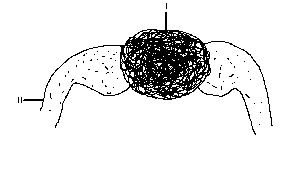
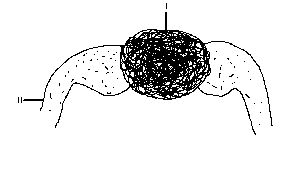
    The structure labelled I is formed as a result of the fusion of
    Answer
    (B)
    several pairs of nuclei
  • 6

    The special name of the part labelled II is

    Answer
    (C)
    suspensor
  • 7
    The ability of the cockroach to live in cracks and crevices is enhanced by the possession of
    Answer
    (D)
    dorso-ventrally flattened body
  • 8
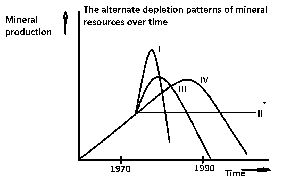
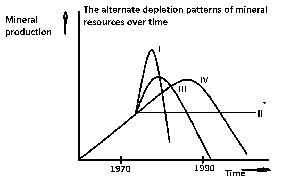
    The caste of termites that lacks pigmentation is the
    Answer
    (B)
    worker
  • 9
    The structure that prevents food particle from escaping through the fish gills are called gill
    Answer
    (C)
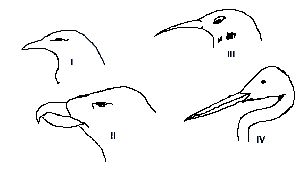
    rakers
  • 10
    A distinguished feature of mammals is the possession of
    Answer
    (D)
    hair
  • 11
    Which of the following structures is capable of producing more tissues in the stem of a herbaceous flowering plant?
    Answer
    (D)
    Cambium
  • 12
    The manufacture of carbohydrates by plants takes place only in
    Answer
    (C)
    chlorophyllous parts
  • 13
    In a water culture experiment, a plant showed poor growth and yellowing of the leaves. These may be due to deficiency in
    Answer
    (B)
    iron
  • 14
    In million's test, when the reagent is added to a protein food item, a white precipitate is produced which turns
    Answer
    (D)
    red on heating
  • 15
    Regulation of blood sugar level takes place in the
    Answer
    (A)
    pancreas
  • 16
    Unicellular organisms transport essential nutrients directly to all parts of their bodies by the process of diffusion because, they have
    Answer
    (B)
    a large surface area to volume ratio
  • 17
    The heart of the adult frog consist of
    Answer
    (D)
    one ventricle and two auricles
  • 18
    In adult mammalian blood, the cells which lack nuclei are the
    Answer
    (A)
    erythrocytes
  • 19
    Which of following movements occur during exhalation?
    Answer
    (A)
    The diaphragm and intercostal muscles relax
  • 20
    In which of the following groups of animals is the malpighian tubule found?
    Answer
    (B)
    Crickets, houseflies and grasshoppers
  • 21
    Which of the following is not a function of the mammalian skeleton?
    Answer
    (C)
    Transportation
  • 22

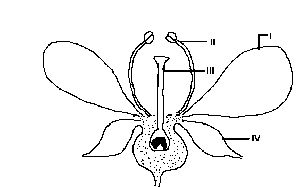
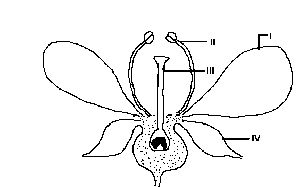
    The ovary represented is

    Answer
    (B)
    inferior
  • 23
    The most reliable estimate of growth is by measuring changes in
    Answer
    (D)
    dry weight
  • 24
    A dry fruit formed from two or more carpels containing several seeds is a
    Answer
    (C)
    capsule
  • 25
    The outermost embryonic membrane in the mammal is the
    Answer
    (B)
    chorion
  • 26
    The small masses of nervous tissues in which many neurones have their nuclei are called
    Answer
    (C)
    ganglia
  • 27
    The corolla is partly represented by
    Answer
    (A)
    I
  • 28
    A group of organisms of different species living in a particular area is described as a
    Answer
    (B)
    community
  • 29
    Which of the following is the direct consequence of transferring energy from one trophic level to another?
    Answer
    (D)
    A decrease in the resulting biomass
  • 30
    The condition that encourages denitrification is
    Answer
    (A)
    low soil oxygen
  • 31
    A fresh water plant such as water lily can solve the problem of buoyancy by the possession of
    Answer
    (A)
    aerenchymarous tissues
  • 32
    The sequence of the biomes in Nigeria from port Harcourt to Damaturu is
    Answer
    (A)
    estuarine → rain forest → Guinea Savannah → Sahel Savannah
  • 33
    Soil micro-organisms are beneficial because of their involvement in
    Answer
    (C)
    cycling of nutrients
  • 34
    Which of the following groups of diseases are associated with water? I Onchocerciasis II Schistosomiasis III Dracunculiasis IV Elephantiasis V Taeniasis
    Answer
    (A)
    I, II and III
  • 35
    One of the ways which body cells differ from gamete cells is in the
    Answer
    (D)
    number of chromosomes they contain
  • 36
    In blood transfusion, agglutination occurs when
    Answer
    (D)
    contrasting antigens and antibodies meet
  • 37
    The unrestricted pattern is represented by
    Answer
    (B)
    II
  • 38

    The line that represents efficient recycling combined with stringent conservation is

    Answer
    (C)
    II
  • 39
    After one week of life, the weight of five chicks of the same sex hatched simultaneously from the eggs of the same hen and fed on the same diet were 45g, 40g, 35g, 33g and 30g. This is an example of
    Answer
    (C)
    variation
  • 40
    The phenotype of an individual can be summed up as the
    Answer
    (B)
    individual's physical appearance
  • 41
    The correct increasing order of size for the cell components responsible for heredity is
    Answer
    (B)
    DNA → gene → chromosome → nucleus
  • 42
    A sex-linked character cannot be passed on directly from
    Answer
    (A)
    father to son
  • 43
    The biological association that contributes directly to succession in a community is
    Answer
    (A)
    competition
  • 44
    The group of insects that have mouth parts adapted for both piercing and sucking is

    Answer
    (C)
    mosquitoes, tse-tse flies and aphids
  • 45
    The bird's bill adapted for fishing is labelled
    Answer
    (D)
    IV