WAEC - Biology (2000)
1
Amoeba obtains its oxygen requirements
Responder(C)
through diffusion of air into its body
2
Which of the following best describes a colony of volvox?
Responder(A)
Asexually reproduced cells held together in a mass, but independent of each other
3
The hydra has two body layers of cells called
4
All the following organelles have membranes except
5
Which of these has the most complex level of organization?
6
The unit contained in a cell structure responsible for changes in form and shape of organisms is called
7
The plant cell mostly stores food as
8
The presence of a large member of mitochondria in a cell indicates that
9
Which of the following statements is incorrect about diffusion?
Responder(D)
Molecules move from region of lower concentration to that of higher concentration.
10
In which of the following organisms is ammonia excreted as a waste product?
11
The following are the functions of supporting tissues in plant except
12
Which of the following organisms has the largest surface area-to-volume ratio?
13
Which of the following plant parts does not perform supportive function?
Responder(B)
Epidermis, sclerenchyma and xylem
14
The following are useful effect of micro-organisms except
15
Which of the following structures is not present in the vascular bundles of a dicot stem?
16
When a mammal respires anaerobically for a long time
Responder(C)
lactic acid accumulates in the muscles
17
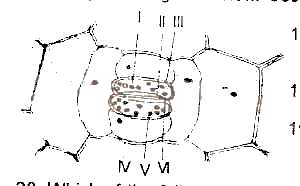
Which of the labelled structures in the diagram are involved with the entry
of carbondioxide for photosynthesis?
18
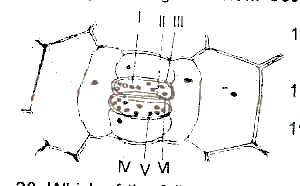
Which of the labelled structures in the diagram will shrink when plasmolysis
occurs?
19
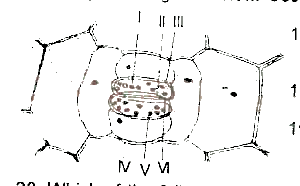
The condition shown in the above diagram is due to
Responder(C)
excess water in structure labelled I
20
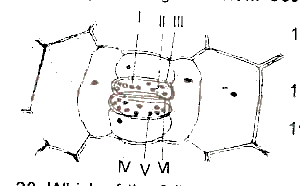
Which of the following solutions will induce the condition shown in the diagram?
21
Which of the following conditions will cause a decrease in body temperature?
Responder(D)
Relaxation of the erector muscles
22
The organs constantly in touch with the liver are
23
Which of the following is responsible for the increased heart beat of a boy who saw a python? increased
production of
24
The nerves that arise from the brain are known as
25
The neurone that relay the message of effector organs are called
26
Each neurone consists of the following structures' except
27
The simplest form of nervous pathway which links receptors with effectors is known as the
28
Which of the following parts of the eye is sensitive to light?
29
What happens to an ovule of a flower, after fertilization? It
30
Which of the following is not a dry indehiscent fruit?
31
Which of the following groups consists of only micro-nutrients?
Responder(C)
Manganese, molybdenum and zinc
32
The first stable product of photosynthesis is
33
Which of the following statements about nitrogen is not correct? Nitrogen is needed for
Responder(B)
activating certain enzymes
34
A very poor growth in plants and discolouration of leaves signifies the deficiency of
35
Vitamin C which is water soluble is
36
Vitamin C deficiency results in
37
Members of the vitamin B complex are
38
Which of the following statements about phosphorous is not correct?
Responder(A)
Helps to regulate the acid-base balance of the body
39
Vitamin E is concerned with
40
A balanced meal for an adult person may consist of
Responder(C)
four slices of yam and stew, two pieces of beef, one cup of tea with milk and two oranges
41
Which of the following food substances turns bright red when warmed with suddan III solution?
42
Mammals require a relatively high amount of carbohydrates because
Responder(D)
they yield energy for activities.
43
All the available places on earth which support life constitute the
44
The abiotic factor which determines the depth to which light penetrates in a pond is
45
Which of the following organisms is a producer?
46
Which of the following groups consists of heterotrophs?
47
Which of the following organisms will not bring about decomposition?
48
Which of the following is not released during decay of living matter?
49
Responder(C)
one of the organisms gains while the other neither gains nor loses
50
Parasitism can best be defined as an association between two organisms in which
Responder(D)
one organism gains and the other loses
51
Which of the following best describes the adaptation of the earthworm to its habitat?
Responder(A)
Living in burrow during the day to prevent desiccation
52
Trypanosomiasis is associated with
53
The major reason why foods should be properly covered is that
Responder(A)
micro-organisms in air would contaminate the food
54
Which of the following is not a means of conserving natural resources?
55
Which of the following resources is non-renewable?