If 200 ml of water was poured on a soil sample in a beaker and 25% of the water drained through the soil, determine the amount of water retained in the soil.
Responder
(D)
150 ml
3
A combine harvester is mainly used for harvesting
Responder
(D)
rice
4
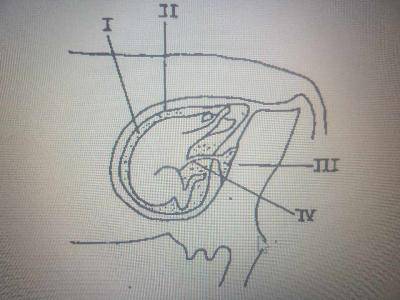
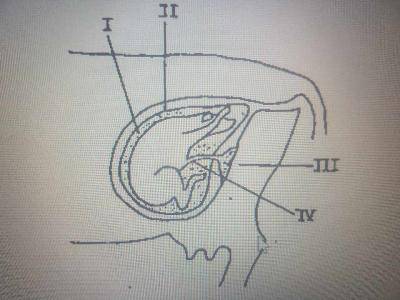
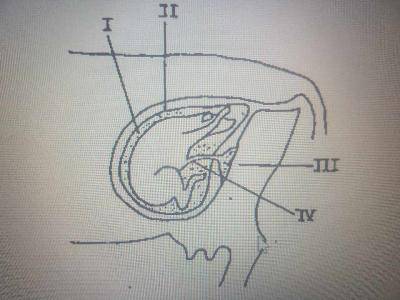
The diagram above illustrates a reproductive process in a farm animal. Study it and answer the question.
The reproductive process illustrated by the diagram is
Responder
(B)
gestation
5
The diagram above illustrates a reproductive process in a farm animal. Study it and answer the question.
The parts which protect the foetus from mechanical injury are labelled
Responder
(B)
I and II
6
The diagram below illustrates a reproductive process in a farm animal. Study it and answer the question.
The foetus obtains dissolved oxygen and nutrients from the dam through the parts labelled
Responder
(D)
III and IV
7
The risk of production in agricultural business is borne by the
Responder
(A)
farm owner
8
The bacterium which is responsible for conversion of ammonium compounds to nitrites in the nitrogen cycle is
Responder
(B)
Rhizobium
9
Study the table below and use it to answer the question
Cost Price (N)
Useful Life (Life)
Salvage value (N)
Annual depreciation (N)
Total depreciation
20000
Y
5000
1000 annum
15000
60000
10
18000
4200 annum
Z
The useful life represented by Y in the illustrated table is
Responder
(C)
15 years
10
Study the table below and use it to answer the question
Cost Price (N)
Useful life (Years)
Salvage value (N)
Annual depreciation (N)
Total depreciation
20000
Y
5000
1000 annum
15000
60000
10
18000
4200 annum
Z
The total depreciation represented by Z in the illustrated table is
Responder
(A)
N 42,000
11
High relative humidity in a brooder house could lead to
Responder
(C)
build up of pests and diseases
12
Examples of cover crops are
Responder
(A)
Centrosema pubescens and Mucuna utilis
13
Which of the following tools are used in soil analysis?
I. pH meter
II. Sieve
III. Hygrometer
Responder
(C)
I, II and III
14
The reduction of three seedlings of maize to two plants per stand is referred to as
Responder
(B)
thinning
15
Cotton stainer is an insect pest of
Responder
(A)
cotton
16
Day-neutral crops are crops that produce flowers regardless of
Responder
(C)
amount of sunlight received by flowering plants
17
Rural-urban migration of farm labour could be prevented by
Responder
(D)
establishing agro-based industries in villages
18
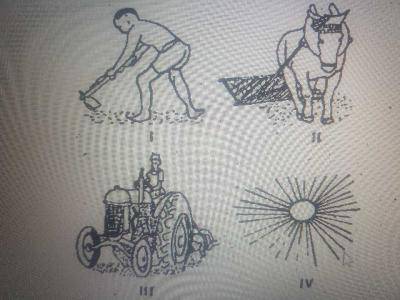
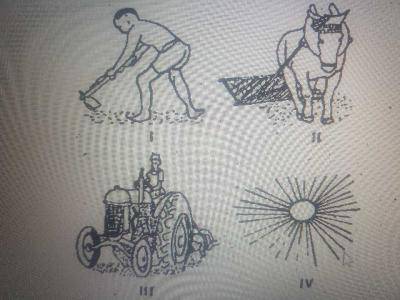
The diagrams below illustrate different sources of farm power. Study them and answer the question.
Which of the illustrated sources of farm power is the cheapest
Responder
(D)
I
19
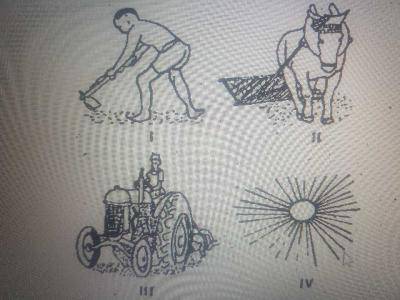
The diagrams below illustrate different sources of farm power. Study them and answer the question.
The machinery illustrated in diagram III could be used to power
I. planters
II. dryers
III. sprayers
Responder
(D)
I, II and III
20
The diagrams below illustrate different sources of farm power. Study them and answer the question.
Which of the illustrated sources of farm power decrease in efficiency due to constant use?
Responder
(D)
I, II and III
21
Post-planting operations in cocoa plantation include
I. rogueing
II. stumping
III. mulching
Responder
(B)
I, II and III
22
A major reason for encouraging afforestation in arid regions of West Africa is to
Responder
(B)
serve as windbreak to check desert encroachment
23
The farming system generally recommended for farm settlement scheme is
Responder
(D)
mixed farming
24
Which of the following products is not a primary forest product?
Responder
(A)
Plup
25
A pest of honeybee is
Responder
(B)
grasshopper
26
In order to backup extension messages, an extension agent should
Responder
(B)
assist farmers in locating sources of farm inputs
27
The storage structure usually installed by the government for bulk storage of grains in West Africa is
Responder
(D)
silo
28
Monocotyledonous crops are characterized by
Responder
(A)
parallel-veined leaves
29
Steaming up ration should be fed to
Responder
(A)
pregnant animals
30
Which of the following paring enterprise could best be combined with fish farming for mutual benefits?
I. Vegetable production
II. Beekeeping
III. Poultry production
Responder
(A)
I and III only
31
The number of teats in the udder of a cow is
Responder
(A)
four
32
The part of a disc plough to which discs are connected is
Responder
(B)
standard
33
Grading of farm produce is important because it
Responder
(C)
facilitates pricing
34
Which of the following statements about underground drainage is true
Responder
(D)
Water seeps into tiles to reach an outlet where it is discharged
35
Which of the following pairs of livestock diseases could be contracted through inhalation?
Responder
(B)
Newcastle disease and aspergillosis
36
Maceration is carried out in the processing of
Responder
(B)
oil palm
37
If the seed rate for the cultivation of cowpea is 25 kg per hectare, determine the quantity of cowpea seeds required to cultivate a farmland measuring 100 m by 500 m.
Responder
(A)
125 kg
38
A beneficial effect of bush burning is that it
Responder
(C)
encourages the regeneration of grasses
39
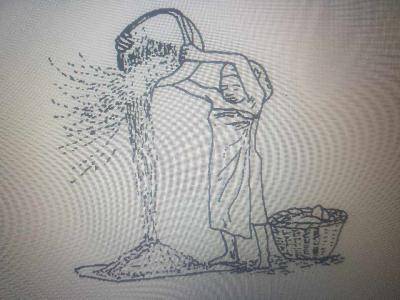
The diagram above illustrates a farm operation. Study it and answer the question
The illustrated farm operation is known as
Responder
(A)
winnowing
40
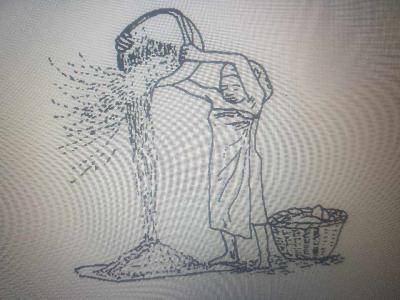
The diagram above illustrates a farm operation. Study it and answer the question
Examples of crops which require the illustrated farm operation are
Responder
(C)
rice, groundnut and millet
41
Ornamental plants are primarily cultivated to
Responder
(B)
beautify the environment
42
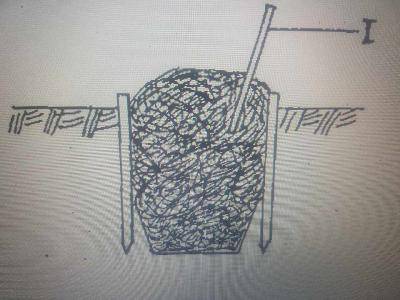
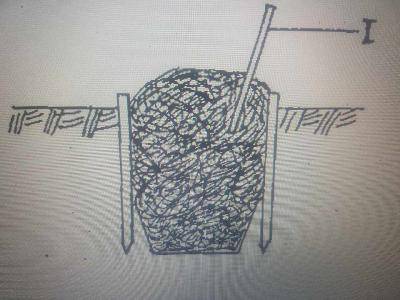
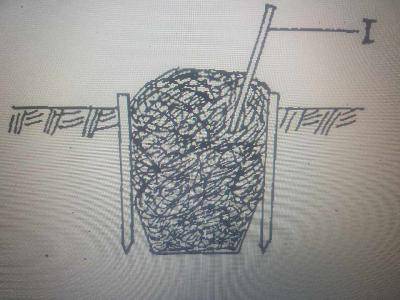
The diagram above illustrates a method of compost making. Study it and answer the question.
The method of compost milking illustrated in the diagram is
Responder
(D)
pit
43
The diagram above illustrates a method of compost making. Study it and answer the question.
The part labelled I is used for
Responder
(C)
turning the compost materials
44
The diagram above illustrates a method of compost making. Study it and answer the question.
A material that could be used as starter in the method of compost making illustrated is