JAMB - Biology (2025)

  • 1
    The process that brings about the cooling effect on the body of mammals is
    Responder
    (A)
    sweat excretion
  • 2
    Which of the following controls protein and enzyme syntheses in the cytoplasm of the cell?
    Responder
    (B)
    Nucleus
  • 3

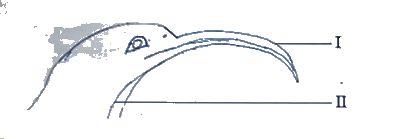
    Use the diagram above to answer the question that follows.

    The structure labelled I is adapted for

    Responder
    (D)
    sucking
  • 4
    A complex feeding relationship between organisms in a habitat that involves transfer of energy in form of food is
    Responder
    (A)
    food web
  • 5
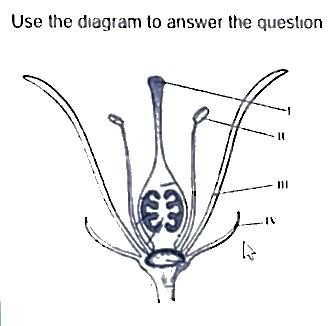
    One of the characteristics of insect pollinated flowers is
    Responder
    (C)
    scented flowers
  • 6
    The process by which plants absorb water from the soil through their roots is
    Responder
    (C)
    osmosis
  • 7
    The bright colouration of the flower of a flowering plant is an adaptation for
    Responder
    (A)
    reproduction
  • 8

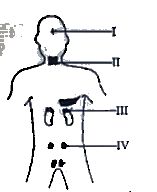
    Use the diagram above to answer the questions that follow

    The endocrine gland that is located in the part labelled I is

    Responder
    (C)
    pituitary
  • 9
    One of the components of peripheral nervous system is
    Responder
    (D)
    sensory neurones
  • 10
    When the cotyledons appear above the soil during germination is called
    Responder
    (B)
    epigeal
  • 11

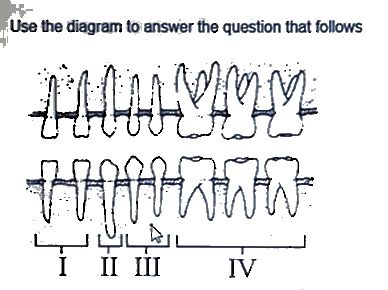
    The type of teeth used for tearing in man is labelled

    Responder
    (D)
    II
  • 12
    Which of these animals create their natural habitats in burrows?
    Responder
    (A)
    Bush rat
  • 13
    The green-brown colour of grasshopper's body in dry grass field is an adaptation for
    Responder
    (A)
    camouflage
  • 14
    Which of the following is an advantage of cross fertilization?
    Responder
    (B)
    It leads to the production of healthier offspring.
  • 15
    In most vertebrates, the common basic plan with a skull, vertebral column and a pair of girdle is an evidence of evolution from
    Responder
    (C)
    comparative anatomy
  • 16
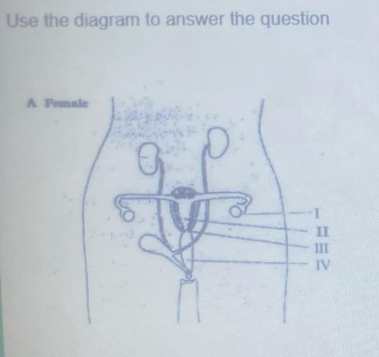
    Example of animal exhibiting mating colouration is
    Responder
    (A)
    agama lizard
  • 17
    Which of the following is the excretory organ in birds?
    Responder
    (B)
    kidneys
  • 18
    Whose theory of evolution supports that characters acquired through use or disuse are transmitted to offspring?
    Responder
    (D)
    Larmark
  • 19
    The most suitable soil for crops cultivation in Nigeria is
    Responder
    (B)
    loamy
  • 20
    When calyx of a flower is joined together, it is called
    Responder
    (A)
    gamosepalous
  • 21
    Which of the following statements about poliomyelitis is correct?
    Responder
    (D)
    It is capable for paralysing the limbs.
  • 22
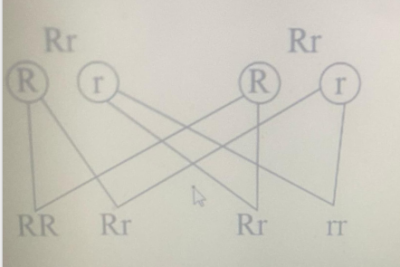
    What is the phenotype of the offspring produced in F\(_1\)?
    Responder
    (D)
    Heterozygous tall
  • 23
    The cortex of a herbaceous stem is made up of
    Responder
    (D)
    parenchyma and collenchyma
  • 24
    The most advanced spermatophyte that forms the largest group of plant kingdom is the
    Responder
    (B)
    angiosperm
  • 25
    Which of the following is a medium of transportation in animal cells?
    Responder
    (D)
    Blood
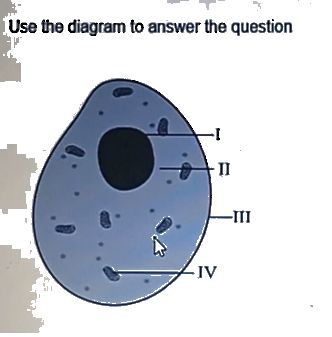
  • 26

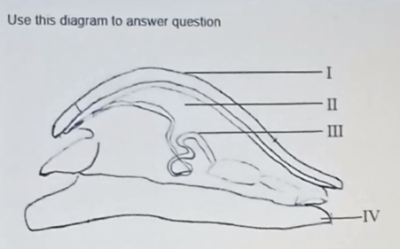
    The part labelled I is the

    Responder
    (D)
    nucleus
  • 27
    Which of these is an estuarine habitat?
    Responder
    (A)
    Lagoon
  • 28
    The mouth parts of a grasshopper are adapted for
    Responder
    (C)
    biting and chewing
  • 29
    The following are factors that affect the population growth of an organism except
    Responder
    (C)
    natality
  • 30
    In ecological succession, the final stable community is called
    Responder
    (A)
    climax
  • 31
    The innermost layer of mammalian epidermis is
    Responder
    (D)
    malphigian layer
  • 32
    In a cross involving a heterozygous red flower plant (Rr) and a white flowered plant (rr), what is the probability that the offspring will be Rr?
    Responder
    (A)
    \(\frac{1}{2}\)
  • 33
    The structure that helps in the formation of cilia and flagella is
    Responder
    (B)
    centriole
  • 34
    The vertebrate bone responsible for the attachment of the abdominal muscles is
    Responder
    (C)
    lumber
  • 35
    The canine teeth are prominent in which group of animals?
    Responder
    (A)
    Carnivores
  • 36
    Translocation of manufactured food in plants is through the
    Responder
    (B)
    phloem cells
  • 37
    The most advanced organism in an evolutionary trend among the following is
    Responder
    (C)
    earthworm
  • 38
    One of the following adapts baobab tree to savanna habitat.
    Responder
    (D)
    Presence of thick bark
  • 39
    Albinism is a disorder caused by
    Responder
    (C)
    recessive genes
  • 40
    An example of a reflex action is
    Responder
    (C)
    coughing
  • 41
    Which of the following is an example of vestigial structure?
    Responder
    (B)
    Human appendix
  • 42
    The correct base pair in DNA molecule is
    Responder
    (D)
    adenine - thymine
  • 43
    Population replacement among species of organisms in a given habitat under competition is due to
    Responder
    (C)
    natural selection
  • 44
    Appendix in humans and caecum in herbivores are evidences of evolution from
    Responder
    (A)
    vestigial organ
  • 45
    A form of adaptive colouration that helps animals to remain unnoticed is
    Responder
    (D)
    countershading
  • 46
    Genetically Modified Organisms (GMO) food products are of benefit to farmers because they are
    Responder
    (A)
    resistant crop varieties
  • 47
    The variation that can be applied in crime detection is
    Responder
    (D)
    fingerprints
  • 48
    The date palm is commonly planted in Sahel zone of
    Responder
    (B)
    Borno
  • 49
    The region of a flower stalk attached to flower parts is
    Responder
    (D)
    receptacle
  • 50
    Which of the following processes takes place in the carbon cycle?
    Responder
    (A)
    Combustion
  • 51
    An instrument used in measuring plants growth is
    Responder
    (B)
    auxanometer
  • 52
    Chlamydomonas belongs to the phylum
    Responder
    (B)
    protophyta
  • 53

    The part of the flower that is brightly coloured and attract pollinating agents such as insects is labelled

    Responder
    (A)
    III
  • 54
    Which of the following blood groups will clump when mixed with anti-a antibody serum?
    Responder
    (A)
    A and AB
  • 55
    Which of these is the correct arrangement of tissues in herbaceous roots from the circumference to the center?
    Responder
    (A)
    piliferous layer, cortex, pericycle, vascular tissue and pith
  • 56

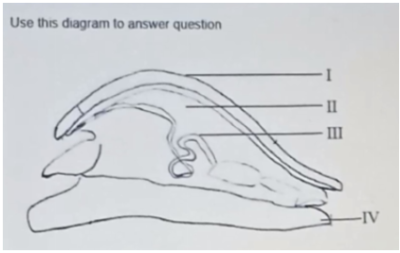
    The part labelled I is the

    Responder
    (C)
    shell
  • 57

    The function of the organelle labelled II is to

    Responder
    (D)
    coordinate the activities of the cell
  • 58
    The cell component that stores waste products is the
    Responder
    (C)
    vacuoles
  • 59
    Which of these plants is considered to be common in an estuarine habitat?
    Responder
    (D)
    Mangrove
  • 60
    Renal artery branches and divides into a mass of blood capillaries in the Bowman's capsule called
    Responder
    (C)
    glomerulus
  • 61

    Glucose → ethanol + CO\(_2\)

    The chemical reaction above represents the process of

    Responder
    (B)
    fermentation
  • 62
    Agglutination occurs in blood transfusion when the
    Responder
    (A)
    antigen and antibody in the donor and the recipient are incompatible
  • 63
    Part of the littoral zone of the marine habitat above the high tide mark, wetted by spray of water from breaking of waves is referred to as the
    Responder
    (A)
    splash zone
  • 64
    Which of the following differentiates photosynthesis from respiration?
    Responder
    (B)
    Oxygen is usually liberated.
  • 65

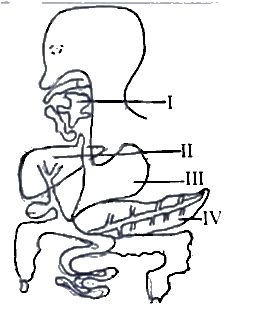
    Use the diagram above to answer the questions that follow

    The part labelled II is the

    Responder
    (A)
    Liver
  • 66
    In which state of Nigeria is Obudu game reserve located?
    Responder
    (A)
    Cross Rivers
  • 67
    In Nigeria, the major climatic factor that determines the distribution of organisms is
    Responder
    (D)
    rainfall
  • 68
    The slender and stick-like shapes of the stick insect is a structural adaptation for
    Responder
    (C)
    protection and defense
  • 69
    In a community with limited resources, the less vigorous species are eliminated due to
    Responder
    (C)
    competition
  • 70
    Which of the following statements is correct about sedimentation of a given soil?
    Responder
    (A)
    Decaying organic matter remains afloat.
  • 71
    Which of the following exists at the organ level of organization?
    Responder
    (C)
    Onion bulb
  • 72
    The organization that provides emergency needs of children globally is
    Responder
    (A)
    UNICEF
  • 73
    A repeating unit of a very large DNA molecule is made up of
    Responder
    (C)
    nucleotides
  • 74
    Which of the following is an effect of carbon monoxide on humans?
    Responder
    (B)
    Reducing oxygen carrying capacity of blood
  • 75
    The constantly dividing cells found at the apex of roots and stem during growth is
    Responder
    (B)
    apical
  • 76
    Macronutrients required by plants include
    Responder
    (D)
    Calcium
  • 77
    The longest single bone in human is the
    Responder
    (C)
    femur
  • 78
    One characteristic which differentiates bats from birds is that bats
    Responder
    (D)
    possess mammary glands
  • 79

    The part labelled II is the

    Responder
    (C)
    uterus
  • 80
    The biological association between bacteria and protozoa in the rumen of cattle is an example of
    Responder
    (A)
    symbiosis
  • 81
    In which of the following organisms does niche differentiation serve as a means of reducing intraspecific competition?
    Responder
    (C)
    Tilapia
  • 82
    Seaweeds and Barnacles are common flora and fauna found in which of these habitats?
    Responder
    (D)
    Marine
  • 83
    Competition between cow and goat for scarce grasses during dry season can be described as
    Responder
    (C)
    interspecific
  • 84
    The oxygen transported to all parts of the body during blood circulation is used for the
    Responder
    (D)
    release of energy from food
  • 85
    The presence of tiny, non-functional hind leg bones inside a whale's body suggests that whales
    Responder
    (B)
    evolved from ancestors that had legs
  • 86
    The genetic make up of an organism is referred to as the
    Responder
    (D)
    genotype
  • 87
    The ability of chameleon to change its colour to that of the environment is for
    Responder
    (C)
    defence
  • 88
    One of the following is a reflex action
    Responder
    (A)
    sneezing
  • 89
    Proteins are macromolecules made of smaller units called
    Responder
    (D)
    amino acids
  • 90
    Transparency of water is measured using a
    Responder
    (C)
    secchi disc
  • 91
    The maximum number of organisms that the resources in the habitat can support is referred to as
    Responder
    (C)
    carrying capacity
  • 92
    Desert plants are usually called
    Responder
    (D)
    xerophytes
  • 93
    An example of a plant whose flower is dispersed by wind is
    Responder
    (D)
    cypsela
  • 94
    An example of a saprophytic organism is
    Responder
    (A)
    rhizopus
  • 95
    Absorption of nutrients in ferns is through
    Responder
    (D)
    rhizome
  • 96
    Which of these insects has a piercing and sucking mouthpart?
    Responder
    (A)
    mosquito
  • 97
    The segregation of genes occurs during
    Responder
    (A)
    gamete formation
  • 98
    Which of the following is a behavioural adaptation of animals for avoiding adverse weather conditions?
    Responder
    (C)
    Hibernation
  • 99
    A medium of transportation of materials in plants is the
    Responder
    (C)
    cell sap
  • 100
    The artery that carries blood to the heart is
    Responder
    (A)
    coronary
  • 101
    The blood vessel that takes away deoxygenated blood from the kidney is
    Responder
    (A)
    renal vein
  • 102
    The relationship between fungus and alga in lichen is an example of
    Responder
    (B)
    mutualism
  • 103
    The digestive enzyme pepsin is active in
    Responder
    (C)
    acidic medium
  • 104
    One of the following is an epidemic diseases in Nigeria
    Responder
    (D)
    cholera
  • 105
    The two - hoofed toes of camels allow easy walking on desert because of
    Responder
    (B)
    enlarged foot surface
  • 106
    Which of these animals uses buccal respiration?
    Responder
    (A)
    Toad
  • 107
    The prevalence of pests and diseases which affect plants and animals in a terrestrial habitat is
    Responder
    (C)
    biotic factor
  • 108
    The heritable disease caused by distorted shape of the red blood cell, hindering free flow of blood in the vessel is
    Responder
    (D)
    sickle cell anaemia
  • 109

    Use the illustration above to answer the question that follows

    What is the genotypic ratio of the F\(_2\) generation?

    Responder
    (D)
    1 : 2: 1
  • 110
    A structure associated with an open circulatory system is
    Responder
    (D)
    haemocoel
  • 111
    Long beak with saw-like edges is an adaptation in
    Responder
    (C)
    pelican
  • 112
    The zone in an ecosystem that provides habitat for living organism is referred to as
    Responder
    (C)
    biosphere
  • 113
    An example of application of variation is
    Responder
    (A)
    paternity determination
  • 114
    The level of organization in onion bulb is
    Responder
    (D)
    organ
  • 115
    The type of germination in which the cotyledons remain below the soil surface is
    Responder
    (C)
    hypogeal