Which of the following is a behavioural adaptation that protects prey from predators?
Responder
(C)
Secreting irritating fluid
2
The period of inactivity seen in some animals during long period of heat or drought is
Responder
(B)
Aestivation
3
The insect trapping movements of the leaves of the venus fly trap is a behavioural adaptation for
Responder
(C)
obtaining food
4
Animals are said to gregarious when
Responder
(C)
they are of the same species moving together in a group
5
The type of nutrition shown by spirogyra is
Responder
(D)
Holophytic
6
Raw materials required by green plants to manufacture their food are
Responder
(B)
inorganic substances
7
Which of the following pairs of organisms are photosynthetic?
Responder
(B)
Euglena and chlamydomonas
8
The type of nutrition in which two organisms of different species live together and derive nutrients from each other is
Responder
(A)
symbiotic nutrition
9
Which of the following statement about the similarities in plant and animal transport is correct?
Responder
(A)
Materials and hormones are transported in fluid form
10
Which of the following describes the function of lymph
Responder
(D)
Body defence
11
One of the major ways in which the blood is able to defend the body against disease causing organisms is
Responder
(B)
Clumping
12
Which of the following is not a transmitable character in plants
Responder
(D)
Haemophilia
13
Inheritable character/features possessed by an organism can be referred to as
Responder
(C)
Traits
14
One of the following is a process of transmission of hereditary characteristics by chromosomes
Responder
(D)
Dictating the formation of a protein by a gene in a chromosome
15
The attachment of the embryo to the wall of the uterus is called
Responder
(B)
Implantation
16
Which of the reproductive system in mammals secretes a part of the seminal fluid which raises the pH of the fluid in the female reproductive system?
Responder
(A)
Cowper's gland
17
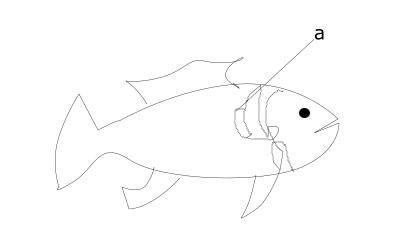
The part labelled a in the above diagram is used for
Responder
(C)
Gaseous exchange
18
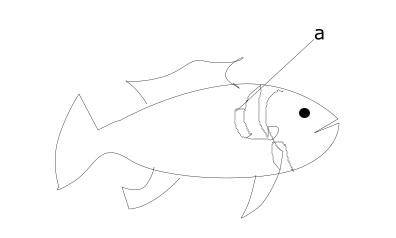
The above organism can be classified under which phylum in the animal kingdom
Responder
(B)
Chordata
19
One important characteristics of green plant is that they
Responder
(C)
Are autotropic
20
A virus can sometimes be regarded as a living organism because it
Responder
(D)
Reproduces in living cells
21
A population is best described as
Responder
(A)
A group of the same species of organisms living together
22
The number of times an organism occurs within a given area of a habitat is referred to as
Responder
(B)
Population frequency
23
Reading the verdict of a case by a magistrate is an example of
Responder
(D)
A voluntary action
24
Which of the following structures controls the activities of the living cell?
Responder
(A)
Nucleus
25
Which of the following are components of glomerular filtrate?
Responder
(C)
All the components of blood except plasma protein and cells
26
The sum total of adaptive changes from pre-existing form that have taken place over a long time resulting in diversity of forms, structures and functions among organism is referred to as
Responder
(D)
Organic Evolution
27
The specific portion of a habitat which is occupied by a particular species is referred to as
Responder
(B)
Ecological niche
28
In plants, respiration occurs in
Responder
(C)
All living cells
29
Which of the following is an example of discontinuous variation?
Responder
(B)
Offsprings including two male cats and three female cats
30
Which of the following type of soil has the highest water retaining capacity?
Responder
(C)
Clay
31
Rabbits cannot survive in an aquatic habitat because they have
Responder
(B)
no gills
32
Which of the following substances pass through the root cell membrane by osmosis?
Responder
(D)
Water
33
Trees in Savanna habitats usually have thick bark which mainly.
Responder
(A)
Reduces the rate of transpiration
34
Competition among individuals of a population increases the
Responder
(C)
Survival of the fittest
35
In natural selection, Darwin proposed that evolution occurred because of the following conditions except
Responder
(D)
food and other needs are abundant
36
Which of the following substances has the highest amount of energy in joules per unit weight?
Responder
(B)
Fats
37
Which of the following pairs of scientists discovered the Rhesus factor in human blood?
Responder
(C)
Landsteiner and Lavine
38
The study of an individual organism or a single species of organism and its environment is
Responder
(A)
Autecology
39
Which of the following is a nitrifying bacterium?
Responder
(B)
Nictrobacter
40
Which of the following is the effect of using artificial pollination in plant breeding?
Responder
(D)
Improvement of the variety of crops
41
Only specially adapted micro-organisms are found in
Responder
(A)
Salty water
42
Plants which can survive in extremely dry places are called
Responder
(B)
Xerophytes
43
The presence of ______ for swimming in a tad-pole enables it to adapt in an aquatic habitat.
Responder
(C)
Tail
44
Possession of thin membrane enables a tapeworm to
Responder
(C)
Absorb digested food from the host's intestine to their system
45
Which of the following juices contains the enzyme ptyalin?
Responder
(D)
Saliva
46
Which of the following essential substance is contained in vegetable?
Responder
(C)
Mineral Salts
47
Good quality food will perform the following functions in human except
Responder
(B)
Providing resistance against malaria
48
Which of the following is considered to be the first product of Photosynthesis?
Responder
(B)
Starch
49
Which of the blood corpusles are irregular and amoeloid in shape
Responder
(A)
Leucocytes
50
Which organ removes the largest quantity of water from the blood?
Responder
(C)
Kidney
51
The movement of blood between the heart and all other parts of the body beside the lungs is
Responder
(D)
Systemic circulation
52
The change in the genetic make up of an organism resulting in an inheritable characteristics which is new is
Responder
(A)
Mutation
53
The organic molecule(s) present in the nucleus is/are
Responder
(A)
DNA
54
Albinism is an expression of trait controlled by
Responder
(B)
Recessive genes
55
The male sex cells also called gametes are produced in the testes by a process called
Responder
(C)
Spermatogenesis
56
Which of the following describes an example of fertilization in higher organisms
Responder
(A)
Fusion of sperm and egg nuclei
57
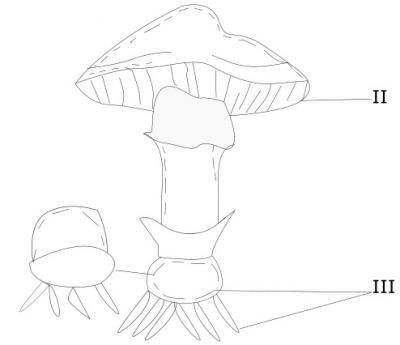
The part labeled III in the above diagram is
Responder
(C)
Hyphae
58
The organism above can be found in
Responder
(D)
Moist environments
59
The possession of chloroplast in Euglena virids enables it to
Responder
(B)
Carry out photosynthesis
60
Viruses are pathogens of the following diseases except
Responder
(A)
Tuberculosis
61
The association between two organisms living together in which only one benefits from the association while the other is neither benefited nor harmed is
Responder
(C)
Commensalism
62
Which of the following will have the least effect on the rate of change of the numbers in a population
Responder
(A)
Mutation
63
Which of the following controls all voluntary actions
Responder
(B)
Cerebrum
64
Which of the following statement describes an autonomic nervous system
Responder
(D)
It affects glands, cardia muscles and smooth muscles
65
The glomerular filtrate contains the following except
Responder
(C)
Blood Corpuscles
66
One of the following is not the theory of natural selection stated by Charles Dawin
Responder
(A)
Characteristics acquired through use or disuse are transmitted offspring
67
Ecology is best defined as the study of
Responder
(B)
The inter-relationship between living organisms and the environment
68
The following processes are involved during expiration in man except
Responder
(B)
The thoracic cavity first increases in volume
69
Which of the following is an example of continous variation?
Responder
(D)
Height in humans
70
One of the following is an effect of clay soil on vegetation
Responder
(B)
Supports scanty vegetation
71
Which of the following factors is not considered in a terrestial habitat?
Responder
(D)
Turbidity
72
What type of vertebrate assists in breathing alongside with the ribs?
Responder
(C)
Thoracic
73
Which of the following statement is correct about Southern Guinea Savanna in Nigeria
Responder
(A)
It is the largest of all the biotic community in Nigeria
74
In an ecosystem, the organism which changes light energy into stored chemical energy is the
Responder
(B)
Producer
75
In the theory of use and disuse Lamarck proposed that evolution occurred because of the following except