An association between the root nodule of a leguminous plant and rhizobium sp, is known as
Risposta
(D)
symbiosis
2
Amphibians are normally found
Risposta
(B)
in water and on moist land
3
Viviparity occurs mainly in the
Risposta
(A)
mammals
4
The jointed structure in insects that bears organs which are sensitive to touch, smell and vibration is the
Risposta
(C)
antenna
5
Which of following groups is the most advanced?
Risposta
(D)
Gymnosperm
6
Most monocots are easily recognized by their
Risposta
(B)
long and sword-like leaves
7
Water fleas, wood lice and barnacles belong to the group?
Risposta
(B)
crustacea
8
The mode of feeding in Amoeba and Hydra is
Risposta
(A)
heterotrophic
9
Which of the following organisms does not exist as a single free living cell?
Risposta
(B)
Mold
10
The center for learning and memory in the human brain is the
Risposta
(C)
cerebrum
11
Urea formation occurs in the
Risposta
(B)
liver
12
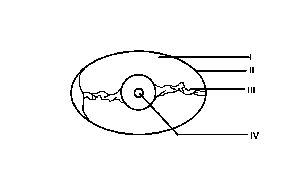
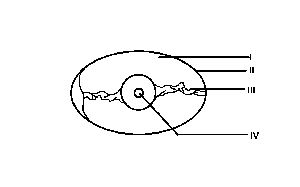
The structure that holds the yolk in position is labelled
Risposta
(D)
III
13
The part labelled IV is the
Risposta
(B)
germinal disc
14
The gas produced during tissue respiration can be identified by using
Risposta
(A)
calcium hydroxide
15
A seedling grown in the dark is likely to be
Risposta
(A)
etiolated
16
The enzyme invertase will hydrolyze sucrose to give
Risposta
(C)
glucose and fructose
17
When yeast respire anaerobically, it converts simple sugar to carbon (IV) oxide and
Risposta
(C)
alcohol
18
The transportation of oxygen and carbon (IV) oxide in mammals is carried out by
Risposta
(D)
erythrocytes
19
The veins of the leaf are formed by the
Risposta
(A)
vascular bundles
20
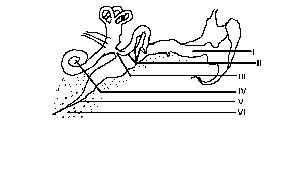
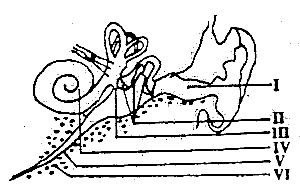
The parts which function together to bring about hearing are labelled
Risposta
(C)
I, II, III and IV
21
The part labelled II is the
Risposta
(D)
ear ossicles
22
When specimen X is mixed with few drops of iodine solution, the appearance of a blue-black colour confirms that X is
Risposta
(B)
starch
23
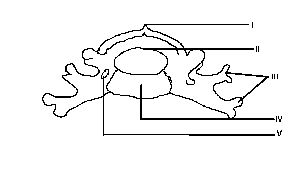
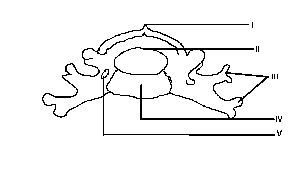
The structure above represents a
Risposta
(D)
cervical vertebra
24
Blood vessel usually pass through the structure labelled
Risposta
(C)
V
25
Salts and water are absorbed in the roots and transported to leaves by
Risposta
(D)
osmosis through the xylem tissues
26
The number of plants species obtained from a population study of a garden is as follows: Guinea grass (15), Ipomea spp (5), sida spp (7) and Imperata spp (23). What is the percentage of occurrence of Imperata spp?
Risposta
(C)
46%
27
Carbon (IV) oxide content of the atmosphere is least affected by
Risposta
(A)
cutting down and clearing of forests
28
The factor that least affects food shortages in sub-saharan Africa is
Risposta
(C)
mixed-cropping
29
The epiphytic habitat can best be described as
Risposta
(A)
arboreal
30
The highest percentage of energy in an ecosystem occurs at the level of the
Risposta
(C)
producers
31
The greatest influence on a stable ecosystem in nature is exerted by
Risposta
(A)
man
32
The physical space occupied by an organism together with its functional role in community can be described as
Risposta
(C)
niche
33
A freshwater pond may contain
Risposta
(C)
water lily, fish, water scorpion and dragon larva
34
The hygrometer is used for measuring
Risposta
(A)
relative humudity
35
The distribution of plants in a rain forest is governed mainly by
Risposta
(D)
rainfall pattern
36
Both recessive and dominant characters are found
Risposta
(B)
at the same locus of a homologous chromosome
37
The probability of a baby being a boy or a girl depends on the contribution of the
Risposta
(A)
father's sex cell
38
Which of the following statements is true of blood groups and blood transfusion?
Risposta
(C)
Group AB is the universal recipient
39
Which of the following is likely to encourage inbreeding in plants?
Risposta
(C)
Monoecious
40
A tall plants crossed with a dwarf one produces offspring of which half are tall and half are dwarf. What are the genotypes of the parents?
Risposta
(B)
Tt, tt
41
In man, the ability to roll the tongue is a variation classified as
Risposta
(B)
physiological
42
Darwin is considered the first scientist who correctly explained the theory of
Risposta
(D)
organic evolution
43
The stem of a typical aquatic plant usually has many
Risposta
(A)
air cavities
44
The role of the male adult honey bee is to
Risposta
(C)
mate with the queen
45
The ability of an organism to live successfully in an environment is known as