The type of nutrition in which organisms take solid organic materials into their body is
תְשׁוּבָה
(B)
holozoic
2
The ability of organisms to maintain a constant internal environment is known as
תְשׁוּבָה
(D)
homeostasis
3
Organisms that feed on dead, decaying tissues of other organisms are known as
תְשׁוּבָה
(A)
saprophytes
4
Which of the following activities is against the conservation of natural resources?
תְשׁוּבָה
(C)
deforestation
5
The food substance that would produce the highest amount of energy is
תְשׁוּבָה
(C)
fat
6
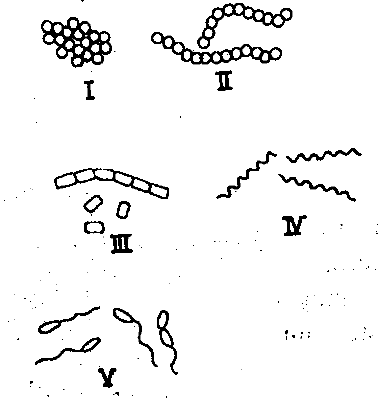
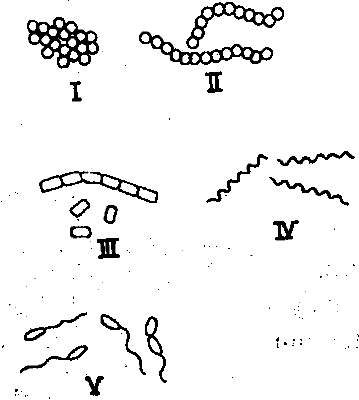
The diagrams above are illustrations of forms in which a particular group of organisms exist. Study them and answer the question.
Which group of organisms is illustrated?
תְשׁוּבָה
(D)
bacteria
7
The diagrams above are illustrations of forms in which a particular group of organisms exist. Study them and answer the question.
in which of the illustrated forms does the organism that causes cholera exist?
תְשׁוּבָה
(D)
V
8
Growth in animals differs from that in plants because growth in
תְשׁוּבָה
(A)
plants is indefinite
9
The structure that its action could result in choking when talking and eating at the same time is
תְשׁוּבָה
(B)
epiglottis
10
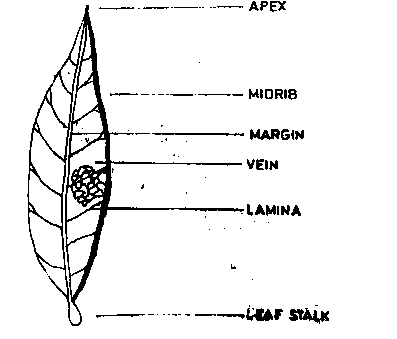
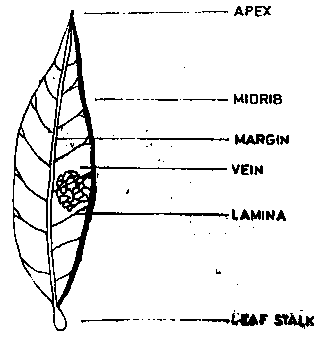
The diagram above is an illustration of a mango leaf drawn by a student in a Biology test. The student failed the test. Study it and answer the question.
The likely reason why the student failed the test was that the
תְשׁוּבָה
(A)
labels were wrong and the guidelines were not touching the structures
11
The diagram below is an illustration of a mango leaf drawn by a student in a Biology test. The student failed the test. Study it and answer the question.
which features of the diagram would have earned the student more marks if shown
תְשׁוּבָה
(D)
title and margin
12
A group of organisms belonging to different species that coexist in the same habitat and interact is referred to as
תְשׁוּבָה
(A)
community
13
The mouthparts of a grasshopper are adapted for
תְשׁוּבָה
(B)
chewing
14
What is the probability that a pregnancy would result in a male child?
תְשׁוּבָה
(B)
\(\frac{1}{2}\)
15
A vestigial structure in humans is
תְשׁוּבָה
(C)
tailbone
16
Which of the following instruments is not used in measuring abiotic factors in a habitat?
תְשׁוּבָה
(A)
microscope
17
Which of the following factors is the main problem facing xerophytes?
תְשׁוּבָה
(C)
lack of adequate water
18
A Rhesus negative woman may experience stillbirth of the second child that is Rhesus positive because
תְשׁוּבָה
(C)
the blood of the foetus might clump
19
Which of the following hormones is wrongly paired with its secretory organ?
תְשׁוּבָה
(C)
adrenalin and kidney
20
The rate of decomposition of dead organisms is faster in the tropical rainforest than in other biomes because
תְשׁוּבָה
(B)
of availability of moisture
21
Which of the following organisms would be the producer in a food chain?
תְשׁוּבָה
(B)
maize
22
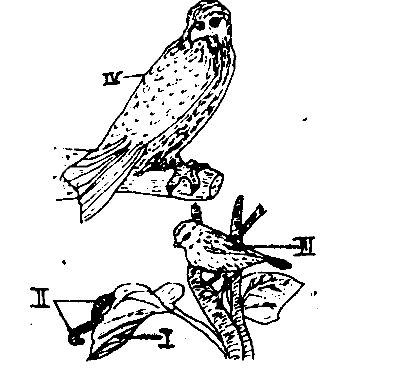
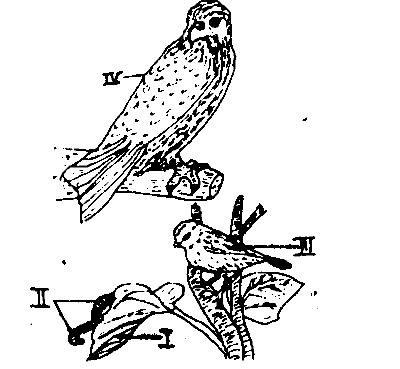
The diagrams below are illustrations of organisms in a habitat. Study them and answer the question,
The feeding relationship between the organisms labelled III and IV in the diagrams is
תְשׁוּבָה
(A)
predation
23
The diagrams below are illustrations of organisms in a habitat. Study them and answer the question, the producer in the diagram is
תְשׁוּבָה
(C)
I because it uses sunlight to manufacture food
24
Which of the following soil types have a high capillarity?
תְשׁוּבָה
(D)
silt and clay
25
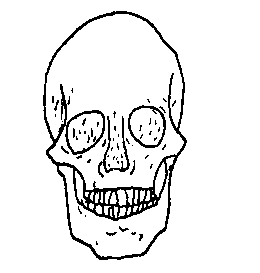
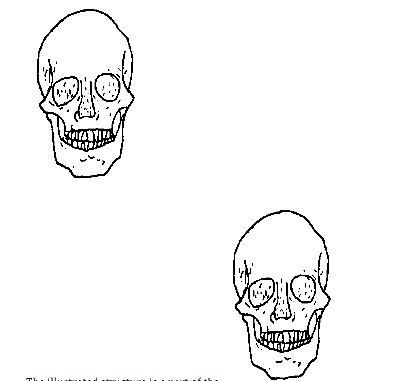
The diagram above is an illustration of a structure in the skeletal system of humans. Study it and answer the question
the illustrated structure is a part of the
תְשׁוּבָה
(B)
axial skeleton
26
The diagram below is an illustration of a structure in the skeletal system of humans. Study it and answer the question
An individual was involved in a car accident and the illustrated structure was badly injured. Which of the following structures would most likely be affected?
תְשׁוּבָה
(B)
Eye, cerebellum and ear
27
Study the list of organisms below and use them to answer the questions.
I-Hydra
II-Owl
III-Snake
IV-Snail
The arrangement of the organisms in order of increasing complexity is
תְשׁוּבָה
(B)
I-IV-III - II
28
Study the list of organisms below and use them to answer the questions.
I-Hydra
II-Owl
III-Snake
IV-Snail
The Phylum of the organism labeled IV is
תְשׁוּבָה
(B)
mollusca
29
Placentation in fruits is referred to as the
תְשׁוּבָה
(A)
arrangement of ovules in the ovary of a flower
30
Which of the following characteristics shows discontinuous variation in plants?
תְשׁוּבָה
(A)
Colour of flower
31
An example of a process that involves osmosis is the
תְשׁוּבָה
(A)
movement of water from root hairs into cortical cell
32
Stunted growth and small yellow leaves in plants are symptoms of the deficiencies of
תְשׁוּבָה
(B)
iron
33
The eye defect caused by an uneven curvature of the cornea or lens or both is
תְשׁוּבָה
(C)
astigmatism
34
Which of the following processes does not occur during photosynthesis?
תְשׁוּבָה
(B)
Carbon (IV) oxide is evolved
35
The illustration above is a genetic diagram. Study it and answer the question below.
What is the name of the genetic diagram?
תְשׁוּבָה
(C)
Punnett square
36
The illustration above is a genetic diagram. Study it and answer the question below
What do the labels I, II, III, and IV respectively represent?
תְשׁוּבָה
(B)
EE, EE, Ee, and Ee
37
The illustration above is a genetic diagram. Study it and answer the question
What is the genotypic ratio
תְשׁוּבָה
(A)
1:1
38
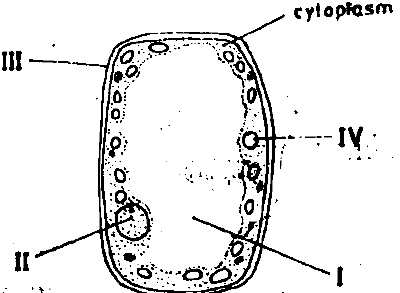
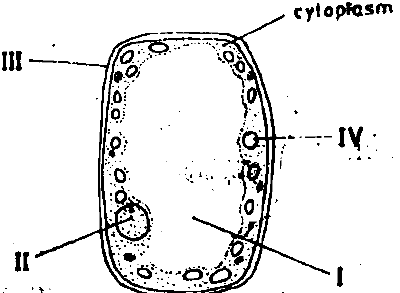
The diagram above is an illustration of a cell in which photosynthesis takes place. Study it and answer the question
In which of the labeled parts would molecules of water and carbon (IV) oxide combine to form sugar?
תְשׁוּבָה
(D)
IV
39
The diagram above is an illustration of a cell in which photosynthesis takes place. Study it and answer the question. the oxygen gas formed in the cell diffuses out of the cytoplasm into the air spaces through the part labeled
תְשׁוּבָה
(C)
III
40
Fishes survive in water mainly because they possess
תְשׁוּבָה
(D)
gills
41
The tricuspid valve is located between the
תְשׁוּבָה
(A)
right auricle and right ventricle.
42
The androecium in a flowering plant is a collection of
תְשׁוּבָה
(A)
stamens
43
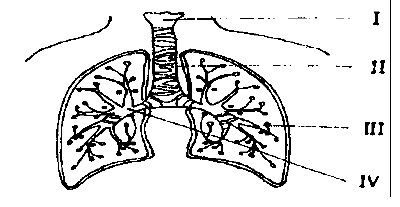
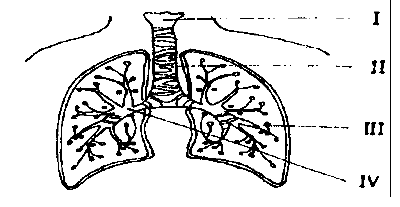
The diagram above is an illustration of some structures used for gaseous exchange in humans. Study it and answer the question
The parts labeled 1, II, III, and IV respectively are
תְשׁוּבָה
(D)
larynx, trachea, bronchiole, and bronchus.
44
The diagram above is an illustration of some structures used for gaseous exchange in humans. Study it and answer the question
the part labeled III can be found in the
תְשׁוּבָה
(A)
lung
45
Use the information below to answer the question
I - making shoes from crocodile skin
II - making tables with plastic
III - using elephant tusk for decoration
IV - using firewood for cooking
The act that should be encouraged for the conservation of wildlife and forests is