Which of the following organisms is not a protozoan?
תְשׁוּבָה
(B)
Ascaris
2
The structure of the cell membrane is a
תְשׁוּבָה
(C)
middle bi-layer of lipid with a protein layer on either surface
3
Which of the following cells is a specialized cell?
תְשׁוּבָה
(C)
Guard cell
4
When a Spirogyra filament is placed in a concentrated salt solution for 30 minutes, the cell would become
תְשׁוּבָה
(A)
plasmolysed
5
Water and salts are both lost from the human body in
תְשׁוּבָה
(D)
sweat and urine
6
Which of the following features could be used to determine the growth of a seedling?
תְשׁוּבָה
(D)
Length of radicle
7
A plant that commonly undergoes vegetative propagation by means of leaves is
תְשׁוּבָה
(B)
Bryophylum
8
Blood pressure is higher in the arteries as a result of
תְשׁוּבָה
(B)
contraction and relaxation
9
A farmer who wants to keep seeds for three years before planting and wants to prevent them from sprouting uses
תְשׁוּבָה
(C)
abscisin
10
A person had an accident that affected the skull but not the nose and later lost the sense of smell. The accident must have a affected the
תְשׁוּבָה
(B)
olfactory lobes of the brain
11
Ability of the human eye to focus images accurately on the retina is called
תְשׁוּבָה
(D)
accommodation
12
Which of the following processes removes carbon (IV) oxide from the atmosphere?
תְשׁוּבָה
(C)
Photosynthesis
13
Which of the following characteristic features is not associated with monocotyledonous plants?
תְשׁוּבָה
(A)
Well differentiated sepals and petals
14
The main difference between a seed and a fruit is that a fruit
תְשׁוּבָה
(B)
has two scars while a seed is has one
15
A student used the following steps in testing for a non-reducing sugar.
I. added Benedict's solution to the sugar solution
ll. added dilute hydrochloric acid to the sugar and boiled it;
lll. added sodium hydroxide solution to the solution in ll. and boiled;
IV. added Benedict's solution to the cooled solution in lll.
Use this information above to answer the question.
Why did the student add the dilute hydrochloric acid to the sugar solution in step ll? To
תְשׁוּבָה
(B)
hydrolyse the sugar solution
16
A student used the following steps in testing for a non-reducing sugar.
I. added Benedict's solution to the sugar solution
ll. added dilute hydrochloric acid to the sugar and boiled it;
lll. added sodium hydroxide solution to the solution in ll. and boiled;
IV. added Benedict's solution to the cooled solution in lll.
Use this information above to answer the question.
What is the importance of step ll in the testing process? To
תְשׁוּבָה
(D)
increase the acid content of the sugar solution
17
A student used the following step in testing for a non-reducing sugar.
I. added Benedict's solution to the sugar solution
II. added dilute hydrochloric acid to the sugar solution and boiled it
III. added sodium hydroxide solution to the solution in II and boiled;
IV. added Benedict's solution to the cooled solution in III.
The colour change to be observed in step IV is
תְשׁוּבָה
(B)
brick-red
18
Which of the following organs of the alimentary canal is not correctly matched with its function?
תְשׁוּבָה
(C)
Appendix - releases enzymes
19
A person suffering from obstruction of the bile duct is advised not to eat fats and oil because
תְשׁוּבָה
(C)
bile emulsifies fat and oil
20
A community reaches a climax when
תְשׁוּבָה
(D)
the composition and size of a community remains constant over a long period
21
Which of the following components make up an ecosystem?
תְשׁוּבָה
(B)
Living and non-living factors
22
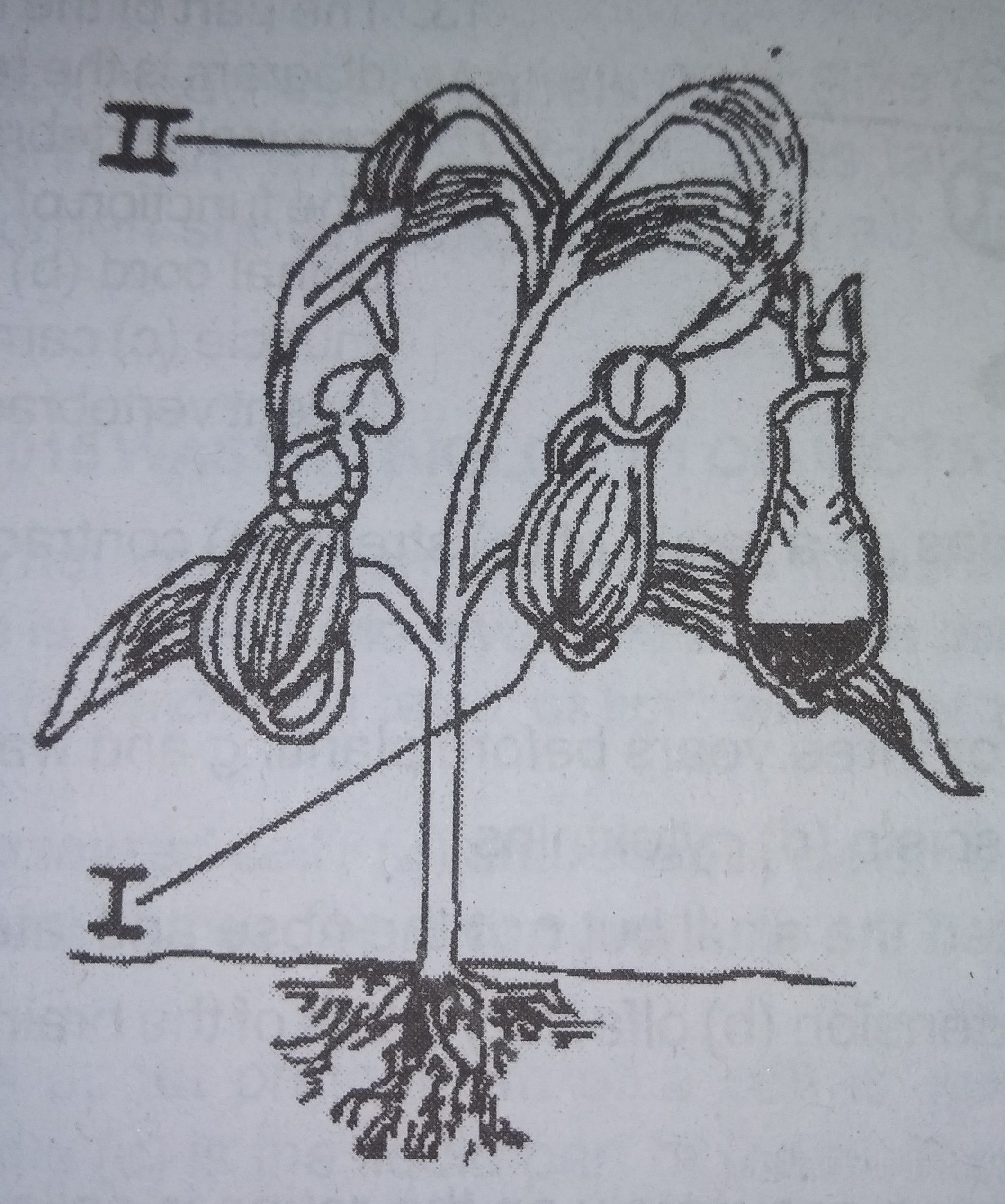
Study the diagram above and answer the question
The structure labelled I is
תְשׁוּבָה
(A)
a pitcher
23
Which of the following organisms is an endo-parasite?
תְשׁוּבָה
(A)
Tapeworm
24
Which of the following organisms is an endo-parasite?
תְשׁוּבָה
(A)
Tapeworm
25
Oil applied to the surface of water kills the larvae of mosquitoes through
תְשׁוּבָה
(D)
Suffocation
26
Which of the following natural resources is most readily available to all organisms?
תְשׁוּבָה
(C)
Air
27
Which of the following resources is non-renewable?
תְשׁוּבָה
(B)
Mineral deposit
28
Soil erosion could be prevented by
תְשׁוּבָה
(B)
cover-cropping
29
Which of the following statements about human blood groups is not true?
תְשׁוּבָה
(A)
A is dominant over B
30
Which of the following traits is not inheritable? Ability to
תְשׁוּבָה
(D)
rool the eyeball
31
A woman with blood group A gives birth to a child with blood group O. Which of the following blood groups cannot belong to the father?
תְשׁוּבָה
(C)
C
32
How many chromosomes will be in a gamete if the normal cell has four chromosomes?
תְשׁוּבָה
(A)
2
33
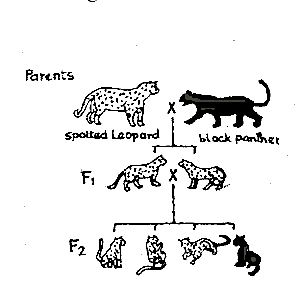
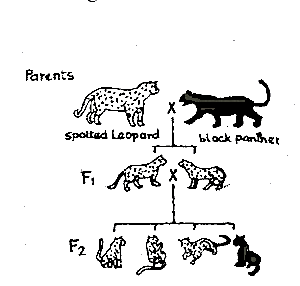
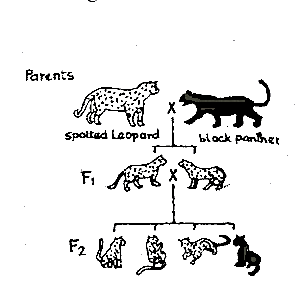
Use the diagram above to answer this question.
What of the following statements about the cross is correct?
תְשׁוּבָה
(C)
The gene for the spotted coat is dominant over the gene for the black coat
34
Use the diagram above to answer this question.
What are the genotypes of the parents if the gene for skin colour is H?
תְשׁוּבָה
(A)
Spotted Leopard HH Black Panther hh
35
Use the diagram above to answer this question.
What are the genotypes of the parents if the gene for skin colour is H?
תְשׁוּבָה
(A)
Spotted Leopard HH Black Panther hh
36
According to Mendel's first law of inheritance, segregation of genes occur when
תְשׁוּבָה
(C)
tall plants and short plants are crossbred
37
Which of the following statements about sex-linked characters is not true?
תְשׁוּבָה
(C)
Males are usually carriers
38
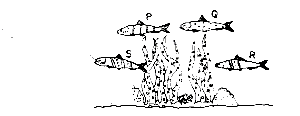
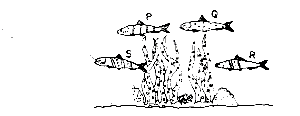
In explaining the term camouflage, to a class, the diagram above show four varieties, P, Q, R, and S of the same species of fish living amongst water plants in a river were used
Which of the varieties is likely to decrease most in number if a predatory fish is introduced into the river?
תְשׁוּבָה
(C)
R
39
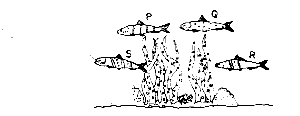
In explaining the term camouflage, to a class, the diagram above show four varieties, P, Q, R, and S of the same species of fish living amongst water plants in a river were used
Which of the varieties is most likely to outlive the others?
תְשׁוּבָה
(B)
Q
40
The variety P,Q,R and S Outlive the others because the
תְשׁוּבָה
(C)
markings of the variety are similar to those of the environment
41
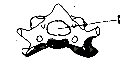
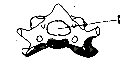
The diagram above illustrates a part of the mammalian skeleton . use it to answer this this question
The part of the skeleton illustrated in the diagram is the
תְשׁוּבָה
(C)
cervical vertebrae
42
The diagram above illustrates a part of the mammalian skeleton . use it to answer this this question
The function of the part lebelled I is to
תְשׁוּבָה
(C)
carry the spinal cord
43
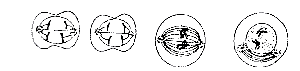
The following diagram above show the sequence of events in early cell division. Study the diagram and answer the question.
In which of the following cells is this divisin likely to take plce?
תְשׁוּבָה
(C)
Muscle cell
44
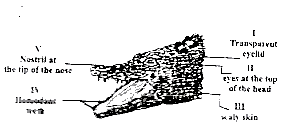
The diagram above is illustration of a crocodile. Use it to answer this question.
Which of the labelled parts enable the animal to stay under water most of the time?
תְשׁוּבָה
(B)
I, II and V
45
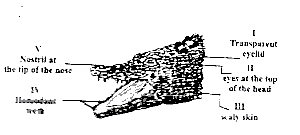
The diagram above is illustration of a crocodile. Use it to answer this question.
Two characteristic features of the class to which the crocodile belongs are labelled