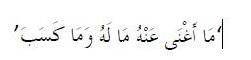
The only Sūrah in the Glorious Qur'an which must be recited in every obligatory prayer is
תְשׁוּבָה
(C)
al-Fātīhah
2
The verse above in sūrah al-Lahab means
תְשׁוּבָה
(C)
no profit to him from all his wealth and gains
3
One important lesson taught in Suratul Kawthar is that Muslims should
תְשׁוּבָה
(D)
worship Allah and sacrifice
4
Suratul Mā'ūn discusses the privilege to be enjoyed by the
תְשׁוּבָה
(D)
the needy
5
The victory of the Roman Empire over the Persian Empire after the Persians had defeated the Romans as stated in the Glorious Qur'an (Q. 30: 2-3) is an evidence of the
תְשׁוּבָה
(D)
authenticity of the Glorious Qur'an
6
The Qur'an is different from other revealed Books because
תְשׁוּבָה
(C)
both spiritual, moral and social values are found in it
7
Prophet Muhammad (SAW) did not hand-over the Glorious Qur'an to his companions in an arranged form and in a single written volume because
תְשׁוּבָה
(B)
the revelation did not come in one piece but at intervals
8
The correct meaning of tafsir is the
תְשׁוּבָה
(A)
detailed explanation and commentary of the Glorious Qur'an
9
Tajwid as one of the science of the Glorious Qur'an is important because
תְשׁוּבָה
(C)
it provides the knowledge of correct pronunciation and recitation of the Glorious Qur'an
10
The gradual spiritual and moral development of Muslims was the wisdom behind the
תְשׁוּבָה
(D)
piecemeal revelation of the Glorious Quran
11
The verse above is in relation to the
תְשׁוּבָה
(B)
preservation of the Glorious Qur'an .
12
The battle that served as a pointer to the compilation of the Glorious Qur'an was fought at
תְשׁוּבָה
(D)
Yamāmah.
13
The committee that standardized the Glorious Qur'an is made up of
תְשׁוּבָה
(C)
Four people
14
A characteristic common to Makkan chapters is that, they
תְשׁוּבָה
(C)
contain a lot of oaths
15
The permission to marry up to four wives in Islam is aimed at
תְשׁוּבָה
(D)
preventing adultery
16
The Prophet (SAW)7 said, 'Of all things lawful, divorce is the most hateful to Allah' because it exposes the parties to
תְשׁוּבָה
(B)
Provocation
17
Imam Malik was born in
תְשׁוּבָה
(C)
Madinah
18
Allah's pleasure in this world and the hereafter can be obtained through
תְשׁוּבָה
(C)
Shari'a
19
Lending out money with interest in Islam is
תְשׁוּבָה
(B)
Ribā
20
The similarity between the Jihad of Uthman b. Fodio and the Prophet's hijrah in 622 C. E was the
תְשׁוּבָה
(B)
inspiration from Allah
21
The companion who introduced Islam to North Africa through Egypt was
תְשׁוּבָה
(A)
Amr b. As
22
The outcome of the Prophet's visit to Cave Hira was
תְשׁוּבָה
(B)
revelation of the Glorious Quran
23
One of the importance of the first revelation was the
תְשׁוּבָה
(B)
dissemination of knowledge
24
Zakat is an economic system that de-emphasize
תְשׁוּבָה
(B)
poverty
25
'O Allah! Lord of power (and rule), Thou giveth power to whom thou pleaseth, and thou strippest off power from whom thou pleaseth ...' Q.3:26 The verse above describes Allah's political power as most
תְשׁוּבָה
(D)
Sovereign
26
The core of Muhammad's (SAW) da'awah in Makkah was on
תְשׁוּבָה
(A)
the unity of Allah
27
The battle of Badr was fought in the 2nd year after Hijrah in
תְשׁוּבָה
(B)
624 A.H
28
The Arabs worshiped idols during the Jahiliyya period because
תְשׁוּבָה
(C)
they believed that the idols will intercede
29
One of the peculiarities of Sahih Bukhari is that a hadith are sorted according to
תְשׁוּבָה
(B)
Chapters
30
One of the two compilers of Hadith that deals with legal traditions of permissions and prohibitions is
תְשׁוּבָה
(C)
Ibn Maja
31
One of the moral lessons in Q.17:23 apart from obedience to parents is
תְשׁוּבָה
(C)
Perseverance
32
The Jews were admonished to avoid mixing truth with falsehood in
תְשׁוּבָה
(D)
Q.2:42
33
The minimum number of witnesses in an Islamic marriage is
תְשׁוּבָה
(C)
two males
34
The term, Shari'ah refers to
תְשׁוּבָה
(A)
A path
35
One of the scholars reported to have been imprisoned by his non compromising stance was