JAMB - Fine Arts (2018)
1
The glory of the Gothic Cathedrals is their
תְשׁוּבָה(C)
use of magnificent stained glass
2
Dyes are colourants most suitable for
3
In traditional Nigerian art, there is a cultural and artistic connection between
4
The first tertiary institution in Nigeria to have an art curriculum was
תְשׁוּבָה(A)
Yaba College of Technology, Lagos
5
In lettering one of the principles is that round characters are placed
6
Prehistoric cave paintings reflected
7
Captions used to enhance television announcements would be more understandable if produced as
8
Which of the following does a textile artist use to form patterns?
9
In Nigerua, thorn carving is practised in
10
A spatula can be inprovised using
11
An armature is essential to the artists in executing large works in
12
Varninsh is essential for the protection of
13
Dogo of Mali is renown for its
14
In computer graphics the name given to a device used in navigating the window environment is
15
Byzantine art emerged in the 4thcentury in
16
The use of lines to describe an object is known as
17
Which of the following pigments can be obtained locally from clay?
18
Pointillism become more popular during
19
Which of the following is best arranged in order of softness?
20
Which of the following is regarded as the founder of Nigerian museums?
21
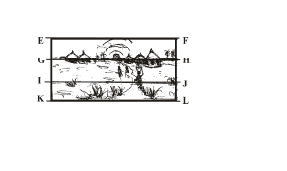
In the pictorial composition given, the eye level is represented by line
22
If the shape illustrated above is a mould, which of the following will best fit into it?
i.

ii.

iii.

iv.

23
Which of the following are characteristics of Egyptian arts?
24
An atomizer is most ideal in the application of
25
Wood carving in Yorubaland was primarily meant for
27
Which of the following grades of pencils is good for making marks?
28
Artworks that are produced to serve a utilitarian purpose are classified as?
29
The Zaria Art School is known for its
31
A permanent pattern made on the skin is called
32
Which of the following supports was used by Roman painters for expression?
33
Ikogosi Warm Spring is decribed as a natural phenomenon because it
34
Which of the following towns is famous for the production of calabash?
35
In corel draw application, ruler guide is used to get the
תְשׁוּבָה(A)
accurate size of a given object
36
The Egyptian sculptural piece that is hald animal is the
37
Calligraphy pen can be preserved after use by
38
The starch used for designing in adire-eleko is boiled with
תְשׁוּבָה(A)
indigo dye and white alum
39
The Mbari artists were mainly based in
40
Mosaic art of decoration was introduced during the
41
Emphasis in a composition, means that attention is drawn to
תְשׁוּבָה(B)
certain parts than others
42
Plasticine is an art medium that can be used in place of
43
The effect produced by the combination of light, shape and colour is
45
The famous artist who worked with Suzanne Wenger was


 ii.
ii.  iii.
iii. iv.
iv. 
 ii.
ii.  iii.
iii. iv.
iv. 