JAMB - Economics (2015)

  • 1
    The law of variable proportions is also known as
    תְשׁוּבָה
    (B)
    law of diminishing returns
  • 2
    All the following are problems identified with agriculture in West Africa except
    תְשׁוּבָה
    (D)
    provision of food for the teeming population
  • 3
    Revenue can be expressed as
    תְשׁוּבָה
    (C)
    total money realized from sales
  • 4
    All the following are factors that would bring about a change in supply except
    תְשׁוּבָה
    (C)
    Entry of new firms
  • 5
    The combination of two commodities each yielding the same level of satisfaction to the consumer is
    תְשׁוּבָה
    (B)
    indifference curve
  • 6
    In which situation is it likely that the demand for labour would be inelastic?
    תְשׁוּבָה
    (B)
    Labour costs are only a small proportion of total costs
  • 7
    The headquarter of the Organization Of Petroleum Exporting Countries (OPEC) is in
    תְשׁוּבָה
    (D)
    Vienna, Austria
  • 8
    What will increase the likelihood that the firms in an industry will conclude to maximize their joint profit?
    תְשׁוּבָה
    (D)
    There are significant barriers to prevent firms entering the market
  • 9
    A commercial bank can create money by
    תְשׁוּבָה
    (D)
    lending to borrowers
  • 10
    The source of all economic problems arises from
    תְשׁוּבָה
    (B)
    Scarcity
  • 11
    The quantity theory of money states that a reduction in the quantity of money in circulation would bring about
    תְשׁוּבָה
    (A)
    A constant change in price
  • 12
    The tax levied on locally produced goods is
    תְשׁוּבָה
    (B)
    excise duty
  • 13
    \(\begin{array}{c|c}
    \text{Capital consumption allowance} & \text{N20,000} \\
    \hline
    \text{Gross domestic production} & \text{N60,000} \\
    \hline
    \text{Factor payment to foreigners} & \text{N10,000} \\
    \hline
    \text{Factor income from abroad} & \text{N15,000} \\
    \end{array}\)

    From the above table, calculate the Gross National Product.
    תְשׁוּבָה
    (B)
    N75,000
  • 14
    Petroleum has the following positive contributions to the Nigerian economy except
    תְשׁוּבָה
    (C)
    development of mono economy
  • 15
    The market in which the operators are many and none of them can influence the price is
    תְשׁוּבָה
    (C)
    perfect market
  • 16
    The concentration of industries in a particular geographical area is
    תְשׁוּבָה
    (A)
    localization of industries
  • 17
    \(\begin{array}{c|c}
    \text{Units of quantity} & \text{Total utility} & \text{Marginal utility} \\
    \hline
    0 & - & - \\
    \hline
    1 & 10 & 10 \\
    \hline
    2 & 15 & 5 \\
    \hline
    3 & 17 & 2 \\
    \hline
    4 & 18 & 1 \\
    \hline
    5 & 18 & 0 \\
    \end{array}\)


    The table illustrate the law of
    תְשׁוּבָה
    (C)
    diminishing marginal utility
  • 18
    All the following are the canons of taxation given by Adam Smith except
    תְשׁוּבָה
    (A)
    objective
  • 19
    Census can be classified as
    תְשׁוּבָה
    (A)
    defacto and dejure
  • 20
    A firm that charges the maximum price without attracting competition from new entrants is
    תְשׁוּבָה
    (C)
    Monopolistic firm
  • 21
    A monopolist has the power to influence the prices of goods and services. Therefore, he is a
    תְשׁוּבָה
    (A)
    price maker
  • 22
    Which of the following business units can issue shares?
    תְשׁוּבָה
    (B)
    Public limited liability company
  • 23
    Which of the following are examples of transfer payment
    תְשׁוּבָה
    (A)
    gift and donations
  • 24
    The technical relationship between the physical inputs and the physical outputs of a firm is
    תְשׁוּבָה
    (D)
    Production function
  • 25
    The income elasticity of demand of normal goods is
    תְשׁוּבָה
    (B)
    positive
  • 26
    The following equations relate to an open economy with a government sector. E = aggregate expenditure on domestically produced goods, C = Consumption, I = Investment, G = Government expenditure, T = taxes, M = imports, X = Exports. Which equation is correct
    תְשׁוּבָה
    (C)
    E = C + I + G + X – M
  • 27
    \(\begin{array}{c|c}
    \text{Units of labour} & \text{Fixed capital} & \text{Total product} & \text{Average product} & \text{Marginal product} \\
    \hline
    0 & 10 & - & - & - \\
    \hline
    1 & 10 & 10 & 10 & 10 \\
    \hline
    2 & 10 & 25 & ? & 15 \\
    \hline
    3 & 10 & 50 & 16.7 & 25 \\
    \hline
    4 & 10 & 80 & 20.0 & 30 \\
    \hline
    5 & 10 & 106 & 21.2 & 26 \\
    \end{array}\)

    Calculate the average product when the 2nd labour was employed 12.5
    תְשׁוּבָה
    (A)
    12.5
  • 28
    The relationship between the cost of living and standard of living is
    תְשׁוּבָה
    (B)
    A lower cost of living give a higher standard of living
  • 29
    The ordinalist approach of utility postulated that utility can be
    תְשׁוּבָה
    (A)
    Rank
  • 30
    The frequent value that occurs most in a data is
    תְשׁוּבָה
    (C)
    mode
  • 31
    Mr. Patrick’s income is N900 while that of Mr. Shodawe is N1,300. if Mr. Patrick and Shodawe pay N90 and N130 as taxes, the tax system is
    תְשׁוּבָה
    (D)
    Proportional
  • 32
    Which of the following is not a type of unemployment
    תְשׁוּבָה
    (A)
    factory unemployment
  • 33
    \(\begin{array}{c|c}
    \text{Units of variable factor} & \text{Total
    Product} \\
    \hline
    1 & 25 \\
    \hline
    2 & 31 \\
    \hline
    3 & 40 \\
    \hline
    4 & 48 \\
    \hline
    5 & 55 \\
    \end{array}\)


    The marginal product at the fifth variable factor is
    תְשׁוּבָה
    (A)
    7
  • 34
    The financial institution known as a building society is
    תְשׁוּבָה
    (C)
    mortgage bank
  • 35
    A line in commodity space which shows the constraints imposed by his budget, his money income and the price of goods purchased is
    תְשׁוּבָה
    (C)
    Budget line
  • 36
    The information that rank a consumer preferences is given by
    תְשׁוּבָה
    (A)
    Scale of preference
  • 37
    The ownership of a public limited liability company is made up of
    תְשׁוּבָה
    (C)
    minimum of seven and no maximum number
  • 38
    All the following are types of specialization except
    תְשׁוּבָה
    (A)
    Manager Specialization
  • 39
    A market will be at equilibrium when
    תְשׁוּבָה
    (A)
    demand and supply are equal
  • 40
    Which of the following will shift the demand curve for Bournvita to the right
    תְשׁוּבָה
    (B)
    an increase in income
  • 41
    Find the range in the following data 9, 15, 6, 20, 24, 18, 12, 8, 20, 10, 5.
    תְשׁוּבָה
    (C)
    19
  • 42
    All the following are properties of an indifference curves except
    תְשׁוּבָה
    (A)
    it can intersect
  • 43
    Isocost and isoquant can be attributed to
    תְשׁוּבָה
    (C)
    Theory of production
  • 44
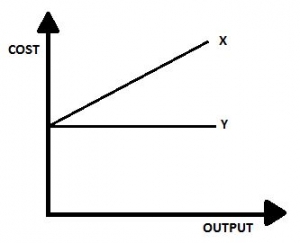
    The line Y in the diagram represents
    תְשׁוּבָה
    (C)
    fixed cost
  • 45
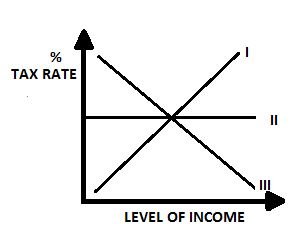
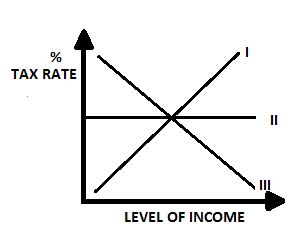
    The curve labeled II illustrates a system of taxation
    תְשׁוּבָה
    (A)
    proportional tax
  • 46
    The curve labeled III illustrate a system of taxation
    תְשׁוּבָה
    (A)
    regressive tax
  • 47
    What would be likely to increase inflation in any economy?
    תְשׁוּבָה
    (A)
    Increase in demand
  • 48
    The term of trade can be expressed as
    תְשׁוּבָה
    (C)
    (Price index of export ÷ Price index of import)× 100
  • 49
    The income of an individual increases from N150 to N250 and his consumption rate increases from N100 to N150. Calculate the Marginal Propensity to Consume
    תְשׁוּבָה
    (D)
    0.5
  • 50
    The study of broad economic aggregates is
    תְשׁוּבָה
    (A)
    Macro economics
  • 51
    Disposable income is total income
    תְשׁוּבָה
    (A)
    less tax
  • 52
    In which of the following economic systems do we have the means of production and exchange controlled by private individuals
    תְשׁוּבָה
    (C)
    capitalist system
  • 53
    The situation whereby the government of a country spends more than its budgets for a given financial year is known as
    תְשׁוּבָה
    (B)
    deficit budget
  • 54
    The total stock of money available for use in an economy is
    תְשׁוּבָה
    (A)
    supply of money
  • 55
    What does the accelerator principles state?
    תְשׁוּבָה
    (C)
    Investment is a function of the rate of change of income
  • 56
    A major limiting factor of mass production is
    תְשׁוּבָה
    (C)
    small size of the market
  • 57
    When elasticity is zero, demand curve is
    תְשׁוּבָה
    (B)
    perfectly inelastic
  • 58
    In a situation where Mux represent the marginal utility of product X while Px represent the price respectively. Utility can be maximized when
    תְשׁוּבָה
    (B)
    MUX = PX
  • 59
    Which of the following could be used to measure the efficiency of labour?
    תְשׁוּבָה
    (B)
    input-output ratio
  • 60
    How can a firm benefit from external economies?
    תְשׁוּבָה
    (C)
    Locating in an area in which the industry is already established
  • 61
    A smaller industry that grows to cater for the need of the major industry is
    תְשׁוּבָה
    (A)
    subsidiary industry
  • 62
    In the diagram, the consumer budget line shift from JK to GH. What can definitely be deduced from the diagram?
    תְשׁוּבָה
    (B)
    There has been a reduction in the price of both A and B
  • 63
    What would encourage the growth of international division of labour?
    תְשׁוּבָה
    (A)
    Improvement in transport system
  • 64
    The demand and supply functions of commodity x are given as follows: Qd = 20- 2p, Qs = 6p - 12 where p = price, Qd = quantity demanded and Qs = quantity supplied. Determine the equilibrium price
    תְשׁוּבָה
    (A)
    N4
  • 65
    The practice of selling goods overseas and often below the cost of production is known as

    תְשׁוּבָה
    (B)
    dumping