Which of the following methods of reproduction is common to Paramecium and Amoeba?
Répondre
(C)
Binary fission
2
Which of the following structures controls the activities of the living cell?
Répondre
(A)
Nucleus
3
Most of the energy in the cell is produced in the
Répondre
(A)
mitochondrion
4
The structure in the cell that controls the movement of substances in and out of the cell is the
Répondre
(A)
cytoplasmic membrane
5
Which of the following structures differentiates an animal cell from a plant cell?
Répondre
(C)
Chloroplast
6
At the end of mitosis the number of cells produced from a parent cell is
Répondre
(E)
two
7
Which of the following statements is not correct of respiration?
Répondre
(C)
Carbondioxide produced in the tissues is removed by the process of osmosis
8
At which of the following stages of mitosis do the two daughter chromosomes separate completely?
Répondre
(C)
Anaphase
9
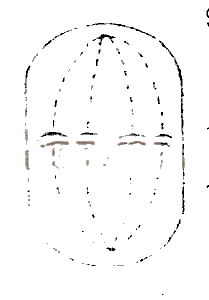
Which of the following processes is not evident from the drawing?
Répondre
(C)
Chromatids held by centromere
10
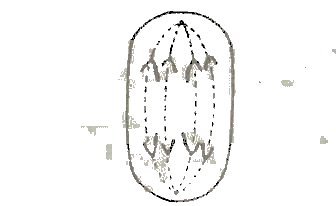
The stage of mitosis represented in the diagram is known as the
Répondre
(B)
metaphase
11
Which of the following is not a function of the mammalian skeleton? It
Répondre
(E)
contracts and relaxes to bring about movement
12
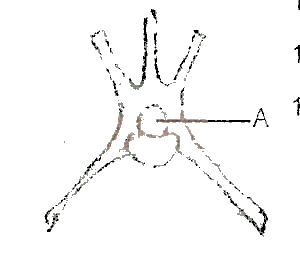
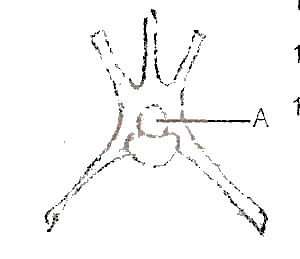
What type of vertebra is represented in the diagram?
Répondre
(E)
Lumbar vertebra
13
The structure labelled A represents the
Répondre
(C)
neural canal
14
Which of the following statements is not correct about the functions of each group
of mammalian vertebrae?
Répondre
(D)
Sacral vertebrae support the skull and allow nodding and rotating movements
15
The stems of young herbaceous plants are kept upright mainly by
Répondre
(B)
turgor pressure
16
Different tissues in plants contribute to the support of the parts as a result of the following characteristics
except
Répondre
(A)
malleability
17
Water vapour is lost in plants during transpiration through
Répondre
(A)
stomata and lenticels
18
Gaseous exchange takes place in the adult toad through the
Répondre
(B)
buccal cavity, skin and lungs
19
Breathing movement in mammals is accompanied by regular movements of the diaphragm and the
Répondre
(A)
intercostal muscles
20
Which of the following are components of glomerular filtrate?
Répondre
(C)
All the components of blood except plasma protein and cells
21
The mechanism by which useful materials in the glomerular filtrate are taken back into the blood is known
as
Répondre
(B)
reabsorption
22
Which of the following takes place during the process of detoxication in the liver?
Répondre
(A)
Poisonous substances in the body are converted into harmless substances
23
The cup-shaped part of the Bowman’s capsule contains
Répondre
(B)
glomerulus
24
The increase in width of blood vessels in the mammalian skin at high temperatures is known as
Répondre
(A)
vasodilation
25
The condition known as cretinism is caused by the deficiency of
Répondre
(D)
thyroxin
26
Which of the following parts of the mammalian brain is involved in taking the decision to run rather than
walk?
Répondre
(E)
Cerebrum
27
The brain and spinal cord make up the
Répondre
(C)
central nervous-system
28
Which of the following is not true about auxins? They
Répondre
(B)
are used in the site of production
29
Which of the following stimuli are not perceived through the skin of mammals?
Répondre
(A)
Light
30
Which of the following parts of the' tongue does not correspond to the taste indicated against it?
Répondre
(C)
Back-sour
31
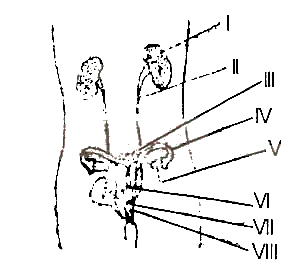
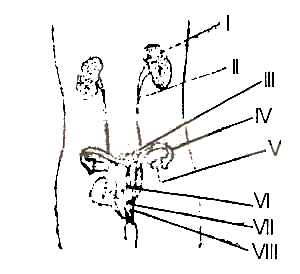
The structures labelled III, VI, IV and II respectively represent the
Répondre
(A)
uterus, cervix, oviduct and ureter
32
The gamete is produced in the structure labelled
Répondre
(E)
V
33
What is the difference between viviparous and oviparous animals?
Répondre
(E)
Laying and brooding of eggs
34
The structure of the embryo which develops and makes contact with the uterine
wall is known as the
Répondre
(A)
umbilical cord
35
The organ located in the mammalian abdominal cavity just below the diaphragm
and lying on top of the stomach is the
Répondre
(C)
liver
36
Which of the following is the effect of using artificial pollination in plant breeding?
Répondre
(B)
Improvement of the variety of crops
37
A dry indehiscent fruit containing one seed and possessing a hairy pappus is described as
Répondre
(C)
a cypsela
38
Thunderstorm can be beneficial to plants because it
Répondre
(C)
adds nitrates to the soil
39
Which of the following is a nitrifying bacterium
Répondre
(A)
Nitrobacter
40
Which of the following reagents is used for the test for starch?
Répondre
(D)
Iodine solution
41
Which of the following is an autotrophic mode of nutrition?
Répondre
(A)
Chemosynthesis
42
Which of the following is not a way of reducing air pollution?
Répondre
(E)
Recycling tins, cans and bottles
43
Which of the following factors is not associated with aquatic habitat?
Répondre
(E)
Humidity.
44
Which of the following types of soil has the highest water-retaining capacity?
Répondre
(A)
Clay
45
Changes in energy flow between organisms in a habitat can be represented by a
Répondre
(C)
pyramid of energy
46
Which of the following processes is not involved in the carbon cycle?
Répondre
(C)
Transpiration
47
Which of the following processes are involved in a water cycle?
Répondre
(A)
Evaporation, condensation and precipitation
48
Water in the human body is derived from the following sources except through
Répondre
(E)
absorption by the skin
49
The conservation of natural resources can be achieved by the following except
Répondre
(D)
deregulated harvesting
50
Water rises most rapidly in
Répondre
(A)
sandy soil
51
Thrombocytes are blood cells responsible for initiating
Répondre
(C)
clotting of the blood
52
When gametes from pure breeding parents with contrasting features such as tallness and shortness are
involved in monohybrid cross, the offspring in the first filial generation are usually
Répondre
(B)
heterozygous dominant
53
A pair of genes which controls a trait is described as?
Répondre
(C)
allele
54
The genetic make-up of an organism is described as its
Répondre
(B)
genotype
55
The precondition for transfusion of blood to an accident victim is
Répondre
(C)
cross-matching the blood group of the donor with that of the accident victim